








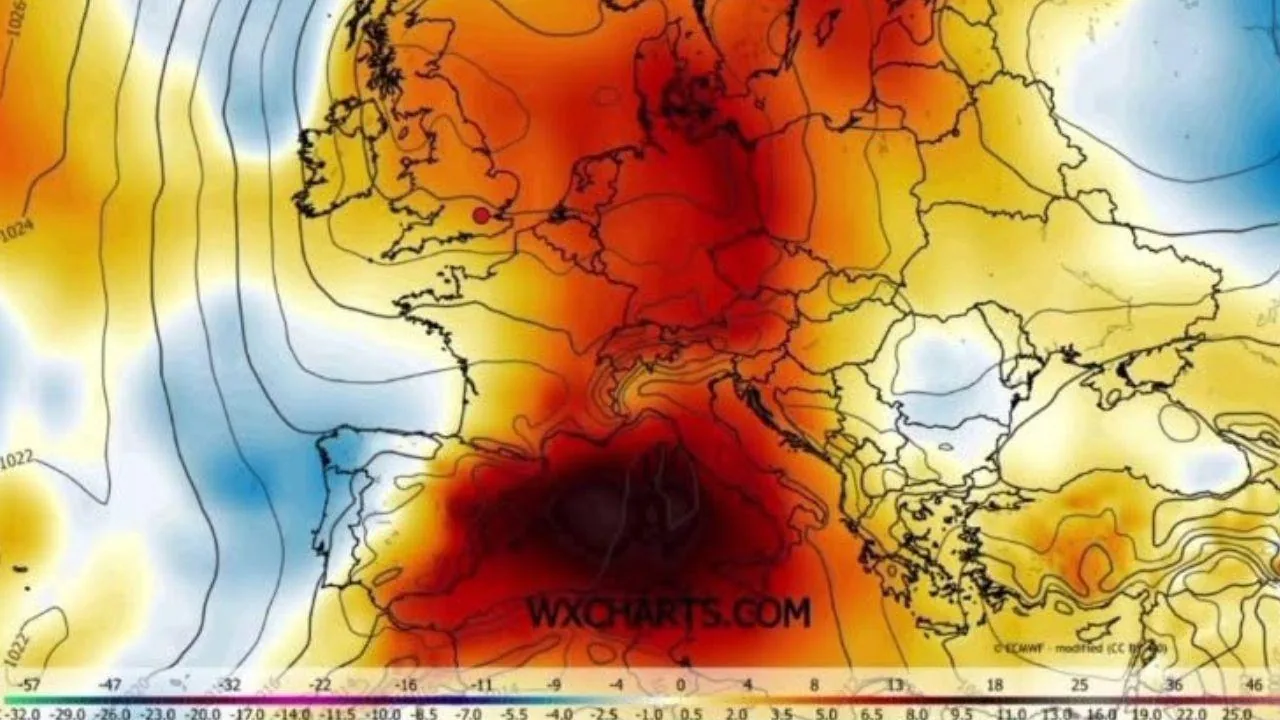
Anyone who thought the worst was over was wrong. After the two heat waves already recorded in June, Tuscany is preparing to face the third heat wave starting tomorrow, Monday, July 13, with an intensification of the heat that will peak between Tuesday and Friday. Forecasts indicate temperatures in the Florentine plain, between Florence and Prato, could nearly reach 40 degrees, while the rest of the region will still record values well above the seasonal average.
Read more Rice salad recalled for Listeria risk: brands and batches to check
The meteorological dynamics about to hit the region are explained by Bernardo Gozzini, sole administrator of the Consorzio Lamma, the environmental monitoring laboratory that has been following the evolution of the Tuscan climate for years.
Dr. Gozzini, what temperatures should we expect for next week?
“Tuscany is about to experience what would be the third heat wave of the summer, and we are just at the beginning of July. Next week, especially Wednesday, Thursday, and Friday, but already from Tuesday, we will see a rise in temperatures. We will probably reach 38-39 degrees, even nearing 40, especially in the Florentine plain.”
And will the situation be different on the coast?
“No, even on the coast temperatures will be well above thirty degrees. The high pressure is strengthening. Today, afternoon thunderstorms are still possible on the Apennine hills, and it is not excluded that they may also occur inland, like those that happened last Friday between Florence and Siena. From tomorrow, and especially between Tuesday and Friday, the anticyclone will definitively consolidate over the entire region.”
What exactly does this strong pressure entail?
“It creates the so-called adiabatic compression, that is, stagnant air that keeps the warm air trapped below. This increases temperatures and maintains humidity in the lower layers because it prevents convection and thus the formation of the classic summer afternoon thunderstorms. So, it will be hot and humid, muggy. From this point of view, for comfort, the situation will be even worse.”
Do we already know how long this phase will last?
“Practically the whole upcoming week, until Friday. Over the weekend, temperatures will probably drop by a couple of degrees, but not much more.” So, no weather break is in sight, with an influx of cooler air or rain? “No, at the moment nothing like that is visible. The anticyclone consolidating over Tuscany leaves no room, in the coming days, for infiltrations of cooler air or a deterioration capable of bringing widespread rain.”
Read more Arezzo, 15-year-old harassed after false rape accusation: five peers investigated for stalking
Looking to the future, should we expect these to be the summers ahead?
“It has been like this for a few years now, and unfortunately, the trend is this, there is little to be done. Summer is the season that in recent years has recorded the greatest increase in temperatures, and it is also the one that causes the worst discomforts. Unfortunately, it will probably also be the season in which we will talk about lost human lives. It already happens, and some centers at the European level monitor it. Heat waves, impacting large portions of territory, are among the extreme events that cause the most victims because they mainly affect the most vulnerable population.”
How much above the seasonal average are we?
“Florence, the municipalities of the Florentine plain, and Prato are the hottest areas of the region, with temperatures well above average, at least six to seven degrees more. The average at this time should be around 32 degrees maximum. It is a bit better inland in Arezzo and Siena, where it will still reach 36 degrees instead of the 38 expected elsewhere.”
Does the sea temperature play a role in this heat wave?
“Yes, and not a minor one. Tuscany is hot also because the Mediterranean Sea is. In several areas, the surface temperature exceeds 26-27 degrees, well above the average for this period, which should be around 24. Such a warm sea loses much of its cooling effect on the coasts, which indeed are only partially spared and still remain at values above the norm.”