

CASTELLINA MARITTIMA. The document “Agriculture, territories and communities – The proposals of the Rural and Organic Districts for the Regional Conference on Agriculture and the new Regional Development Program of Tuscany”, jointly developed by the Tuscan Rural and Organic Districts as a contribution to defining future regional policies, was delivered to the President of the Tuscany Region, Eugenio Giani. The delivery took place during the round table “From the ear of grain to the table: quality, taste, well-being. But is it all our own flour?”, organized in Castellina Marittima by the Municipality of Castellina Marittima, Slow Food Costa degli Etruschi, and the Pro Loco of Castellina Marittima, coordinated by Giacomo Sanavio.
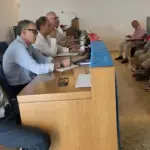
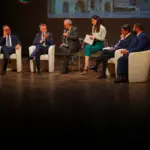
Participants in the round table
The discussion included Annalena Puglisi, Councillor of the Municipality of Castellina Marittima, Francesco Bertanzon, President of the Rural District Terre pisano livornesi, Stefano Berti, Director of GAL Terre Etrusche, Irene Balducci and Federico Leoni from the Sant’Anna School of Advanced Studies, Marina Lauri, head of agriculture at ANCI Toscana, Paolo Rossi, Director of Confagricoltura, and Massimo Rovai, President of Slow Food Toscana.
Presentation of the ALL Tuscany experience
During the debate, researchers from the Agroecology Group of the Sant’Anna School of Advanced Studies presented the ALL Tuscany experience, the regional Living Lab for agroecological transition, as an example of a living laboratory based on collaboration between research, agricultural enterprises, institutions, and local communities to support innovation in agri-food systems and the spread of the agroecological approach in Tuscany.
Institutional presence at the meeting
Also attending the meeting were: Regional Councillor Federico Eligi, the Mayors of Castellina Marittima, Alessandro Giari, Santa Luce, Giamila Carli, Orciano Pisano, Enrico Grechi, the Councillor of Riparbella, Alessandro Lucibello Piani, the President of the Rural and Organic District of Val di Cecina, Davide Bettini, and the President of the Consorzio di Bonifica 5, Francesco Filippi.
Appreciation from President Giani and future commitments
During the meeting, President Eugenio Giani received the document signed by the Districts and expressed appreciation for the work done, committing to give the proposals and reflections contained in the text the highest consideration within the process leading to the definition of the new Regional Development Program and agricultural policies for the next legislature.
Contents and objectives of the document
The document arises from discussions developed in the territories and represents a programmatic platform identifying ten strategic priorities to strengthen the Tuscan agricultural system, enhancing the role of agriculture as an economic, environmental, and social infrastructure of the Region. Topics addressed include the economic recognition of ecosystem services, agroecological transition, revitalization of integrated planning, strengthening cooperation for innovation, enhancement of rural and organic Districts, integration between agriculture, health, and common goods, support for livestock farming in internal areas through adequate veterinary services, improvement of access to land and credit, strengthening entrepreneurial training, and simplification of public administration.
Fundamental principle: adequate income for farmers
At the base of every agricultural policy, however, must be a fundamental principle: guaranteeing an adequate income for farmers and ensuring the economic sustainability of enterprises. To achieve this goal, occasional contributions or emergency measures are not enough; structural responses are needed.
Food policies and agri-food supply chains
Two priority intervention areas are identified: the construction of authentic food policies and the consolidation of agri-food supply chains. More organized and integrated supply chains can improve market access, foster innovation, increase the added value of productions, and strengthen the competitive capacity of agricultural enterprises. The new programming of the Common Agricultural Policy and the Regional Complement for rural development must therefore decisively support these processes through calls for integrated supply chain and district planning.
Agriculture as a cross-cutting development policy
One of the qualifying elements of the document is the request that the next regional programming recognize agriculture not as a sectoral compartment, but as a cross-cutting development policy, capable of simultaneously contributing to economic competitiveness, environmental protection, health, food security, social cohesion, and the vitality of internal areas.
Central role of agriculture in the new regional legislature
The Districts also request that the proposals contained in the document serve as a reference for the preparation of the next Regional Development Program of Tuscany, so that agriculture, agri-food systems, and rural territories assume a central role in the strategies of the new regional legislature.
Declaration of the signing Districts
«The availability shown by President Giani – emphasize the signing Districts – represents an important sign of attention towards the work carried out by the territories. The hope is that the dialogue initiated with the Regional Conference on Agriculture can translate into concrete choices, capable of strengthening the competitiveness of agricultural enterprises, enhancing rural communities, and making agriculture one of the strategic axes of Tuscany’s development in the coming years.»
Document open to further adhesions
The document remains open to further adhesions from Districts and entities that share the goal of building a new season of regional policies based on sustainability, cooperation, and the protagonism of territories.
Read more Earthquake in Tuscany, readers’ testimonies: «A roar and then the house shook»
