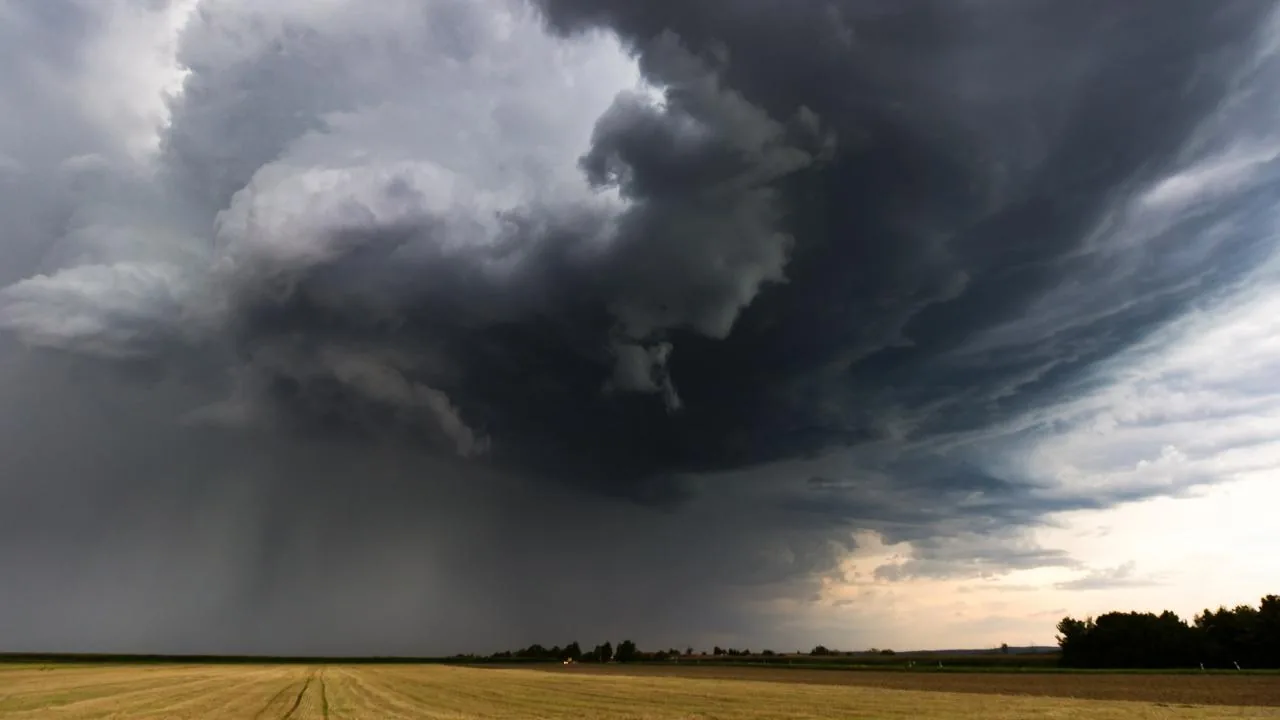







Two men killed by lightning in one day. A double dramatic tragedy within a few hours in two separate incidents – one in Sicily, the other in South Tyrol – which brings attention back to the risks of thunderstorm phenomena at high altitude precisely during the time of year when the mountain records the highest concentration of accidents.
Struck on Etna
Yesterday evening, Sunday, August 16, a 29-year-old hiker died at the Cannizzaro hospital in Catania. According to an initial reconstruction, the young man, of American origin, was in a prohibited area of Etna when he was struck by lightning. The man was rescued, but there was nothing to be done.
The tragedy in South Tyrol
And also yesterday evening, on Piz Starlex, on the border between Switzerland and South Tyrol, a local man was found dead after being reported missing: according to rescuers’ reconstruction, he was also struck by lightning during the descent. The last phone contact with the man was around 1 p.m., directly from the summit of Piz Starlex. At that moment, a thunderstorm was approaching. When, with the onset of darkness, the man had not yet returned, a search was started shortly after 10 p.m. through the Provincial Emergency Center. At 11:44 p.m., rescuers located the man in the area of trail no. 4, at about 2,600 meters altitude, in rough terrain, thanks to the use of a drone. There was nothing more to be done for him. The body was recovered by rescuers and transported downhill. About 40 people were involved in the operation, including alpine rescue operators, finance police, and volunteer firefighters.
A few days ago, a scout was struck on Monte Livata, in Lazio, and is still hospitalized at Policlinico Gemelli but improving.
In Tuscany 21,000 lightning strikes in 6 hours
Today, August 17, Tuscany was also hit by a wave of bad weather that brought heavy thunderstorms especially on the coast. In six hours, an active thunderstorm cell in front of the Livorno coast, on Gorgona and Elba Island caused over 21,000 lightning strikes recorded in the Tuscany area.
What happens if you are struck
The Higher Institute of Health (Iss), on a dedicated web page, explains what happens when you are struck by lightning. From paralysis, amnesia, and loss of consciousness for periods ranging from a few minutes to several hours. But if the lightning current passes through the heart, it can cause cardiac arrest, while if it crosses the nervous or respiratory centers, it can lead to death by respiratory arrest. Burns resulting from lightning strikes can also cause death or serious injuries. The flash of lightning (the flash) can then cause vision disturbances, and the shock wave hearing damage. Other indirect effects of lightning can be fires and falling trees. “In Italy, on average, about 1.6 million lightning strikes occur annually, especially in July and August, but the phenomenon can also occur, more rarely, in winter. The most affected areas are Friuli, the Lombard lake region, the Rome area, and generally the pre-Alpine and Apennine reliefs. However, more generally, there are no areas in Italy exempt from the risk of lightning. There are no studies related to the number of victims and damage to people caused by lightning,” warns the Iss.
Prevention
Iss’s guidelines for prevention. “There are numerous behavioral rules to follow in case of a thunderstorm to minimize the risk of being struck by lightning. In the mountains or outdoors: avoid sheltering under a tree or in a forest: trees are particularly exposed to lightning. If the tree is isolated, the risk of being struck is even greater – emphasizes Iss – Besides trees, it is advisable to stay away from poles (including bus stop poles) and walls: lightning can cause them to collapse, wholly or partially. The best thing, if it is not possible to take cover, is to stay in an open space, away from pointed or metallic objects (including umbrellas, sticks, and ice axes). The best position to assume is crouching, while lying down or standing is more dangerous. Do not engage in hobbies that involve the use of pointed objects, such as fishing or golf. Better to avoid talking on the cell phone, especially if the device has an antenna. At the sea or lake.”
“It is dangerous to swim in the sea during a thunderstorm: water is a good electrical conductor. The best thing is to leave the beach and take shelter. If not possible, better to remain crouched outdoors, without an umbrella and away from pointed or metallic objects.” The house “is a safe place in case of thunderstorms, but certain behaviors must be observed: since water is a good conductor, it is better to avoid bathing or showering and washing clothes. It is also better to unplug appliances, which can burn if the house is struck by lightning. Avoid talking on the landline phone: the charge could propagate through the wires.”
Read more Weather alert in Tuscany, updates on the Palio di Siena – Video