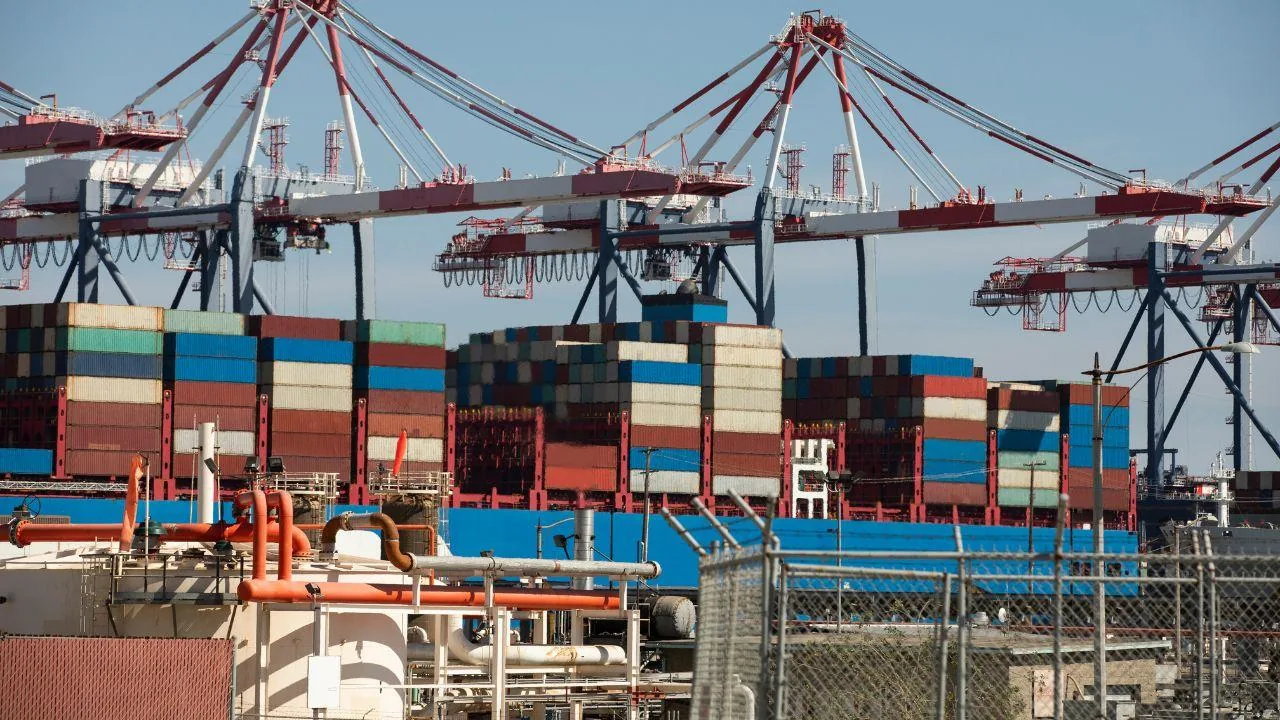









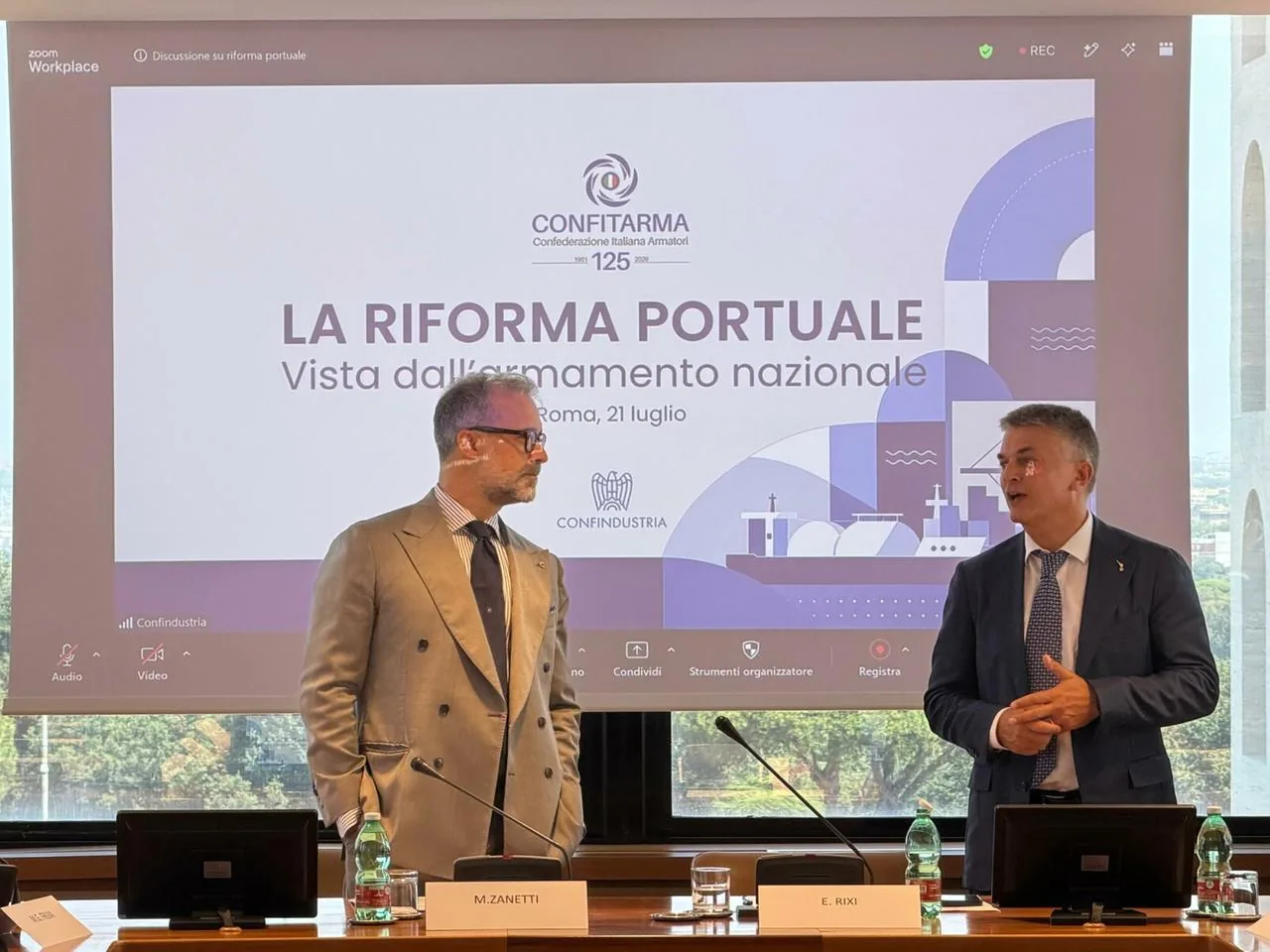
The reform of port governance was at the center of the working table between the General Council of Confitarma and the Deputy Minister of Infrastructure and Transport Edoardo Rixi, organized by the Italian Shipowners’ Confederation and hosted in the Angelo Costa meeting room of Confindustria, to deepen the national shipping industry’s point of view on the bill that redefines the structure of the Italian maritime port system.
Read more Trains, small fire near the tracks between San Miniato and Empoli: delays and cancellations
The meeting opened with the introductory report by the President of Confitarma and Special Advisor for the Sea Economy of Confindustria Mario Zanetti, who reiterated the association’s and its Council’s desire to contribute constructively to the process of refining the Bill, by making available the experience of the shipping industry and the perspective of those who daily experience the relationship between ship, port, and logistics.
“Every company in Italy – declared Zanetti – has to do with the sea, and it is from this point that we must start. Any reform of portuality cannot disregard the competitiveness of the national maritime industry and that of its ships.”
Confitarma President Zanetti and Deputy Minister Rixi jointly highlighted the need to resolutely pursue the simplification of the shipping sector to increase the competitiveness of the industry and, with it, the reaction capacity of the maritime-port system and the entire country.
In his speech, Zanetti highlighted some qualifying aspects of the reform, emphasizing how the objective is to continue to maintain focus on the construction and sharing of a regulatory framework capable of strengthening the efficiency, competitiveness, and strategic governance of the national port system, in the interest of the entire maritime supply chain. In particular, he articulated his reflections around three main areas.
The first concerns national governance and the institutional structure of the reform, with particular reference to the establishment of the central control room and Porti d’Italia S.p.A., the public nature of the new entity, the division of competencies with the Port System Authorities, the concession regime, and the role of ports not belonging to the TEN-T network.
Read more Superenalotto, today’s winning numbers July 21
The second concerns the economic-financial sustainability of the reform, addressing the financing mechanisms of Porti d’Italia S.p.A., the possible impacts on the budgets of the Port System Authorities, the risk of increases in taxes and fees, and the effects that such measures could have on the competitiveness of Italian ports.
The third area was dedicated to participatory governance and the representation of national shipping, highlighting the need to strengthen, within port governance, the structured involvement of representatives from the business world and, in particular, the Italian shipping industry so that, also in light of the previously non-existent associative pluralism, it is fully represented in every port reality.
Deputy Minister Rixi’s analysis was particularly extensive, illustrating the Government’s vision and emphasizing openness to improvement contributions suggested by stakeholders, in this case, the shipping industry.
The meeting was attended by Donato Liguori, Director General for Ports, Logistics and Intermodality of the Ministry of Infrastructure and Transport, Roberto Petri, President of Assoporti, and Stefano Zunarelli, professor and lawyer, expert in Transport and Navigation Law, who offered their contributions after the greetings of Hon. Maria Grazia Frijia, member of the IX Transport Commission of the Chamber of Deputies and rapporteur of Bill AC 2925.
Read more ETS Review, Zanetti (Confitarma): «Disappointed by the European Commission’s lack of courage»