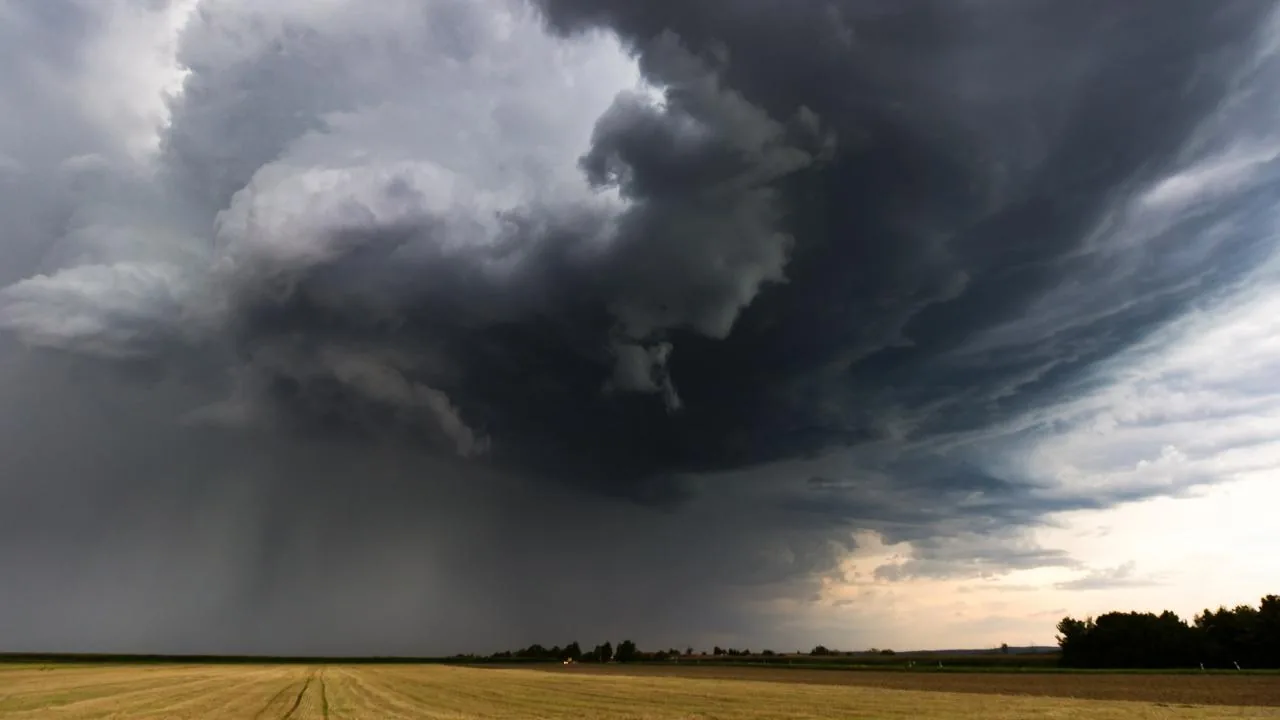










Overcast sky. Feeling of oppressive humidity. Unbearable heat. This is how Tuscany woke up on the morning of Friday, August 28. But all this is about to end. In the second part of the day on Thursday, August 27, the Centro Meteo Toscana released a new analysis of the atmospheric conditions affecting the region. A picture that confirms the phase of strong prefrontal humidity and the oppressive heat that has enveloped much of the territory for hours. “We are in the midst of the prefrontal humid pull and the heat is felt oppressively over almost the entire region.” According to Cmt, the situation is typical of the phases preceding the arrival of a more organized front: very humid air, high temperatures, and a widespread feeling of discomfort. A condition that, however, is not destined to last long.
Read more Superenalotto, today’s winning numbers – Jackpot of 215.1 million euros
️An intense but brief phase
The Centro Meteo Toscana invites to look with confidence to the next hours, emphasizing that the expected worsening is not comparable to the great heat waves that marked the summer. “As in every prefrontal phase, the heat will last little. Nothing to do with the previous heat waves. Ridiculous just to make a comparison.” Cmt recalls how the current European temperatures are radically different from those recorded in recent months, with significantly lower values in France, Spain, and England.
️The libeccio arrives, sharp temperature drop
The first real change is expected already on the morning of Saturday, August 29, when the region will be reached by the libeccio, accompanied by a front passing over central Europe. This is the clearest sign of the arrival of cooler and more dynamic air. “Already on the morning of Saturday, August 29, we will see the arrival of the libeccio accompanying the front over central Europe. Libeccio at 50-60 km/h with a force 6 sea storm north of Vada.” The wind will bring a noticeable drop in maximum temperatures, with even marked differences compared to current values. “Also on Saturday, August 29, maximum temperatures will drop by 6/7 degrees compared to Friday, August 28. On the coast, even 8/9 degrees less with maximums below 30 degrees.” The libeccio will also help make the atmosphere more breathable, while in the southern provinces brief showers and cloudy skies are not excluded. “The wind will then make the atmosphere much more pleasant. In the southern provinces instead, risk of some showers with cloudy skies,” explains Cmt.
️Drop in minimums and finally cooler air
The second part of the improvement will arrive on Sunday, August 30, when the temperature drop will also involve minimum temperatures. A transition that will mark the end of the heat and the return to conditions more appropriate to the season. “On the morning of Sunday the 30th, it will be the minimum temperatures’ turn. 8/9 degrees less than those you will see tomorrow morning with values between 15 and 18 degrees.” According to Centro Meteo Toscana, it will be enough to get through the next 36 hours to find a decidedly more pleasant climate. “Consequently – the analysis concludes – we endure 36h and then we will breathe again.”
Yellow sky
Alongside the prefrontal humid pull and the heat characterizing these hours, there is also a phenomenon visible to the naked eye: the presence of Saharan dust at altitude, capable of changing the appearance of the sky and the colors of the atmosphere. Even in apparently clear sky conditions, the presence of Saharan particles can give the atmosphere a typical milky, yellowish, or slightly reddish hue. This is a well-known effect during desert transport phases, when air masses coming from North Africa reach the western Mediterranean and Tuscany. Sunlight, passing through a thicker atmospheric layer, emphasizes warm tones. This is an effect easily recognizable especially in the hours near dawn and sunset, when sunlight passes through a thicker atmospheric layer and the high concentration of particulate matter can accentuate warm tones.
Read more Rai, waiting for the decision on Ranucci. Report: the names for hosting