





That Tuscany is a coveted destination worldwide is no news. However, there is a part of the region, perhaps less polished, that lives far from the art cities, beaches, or the most beaten paths of mass tourism.
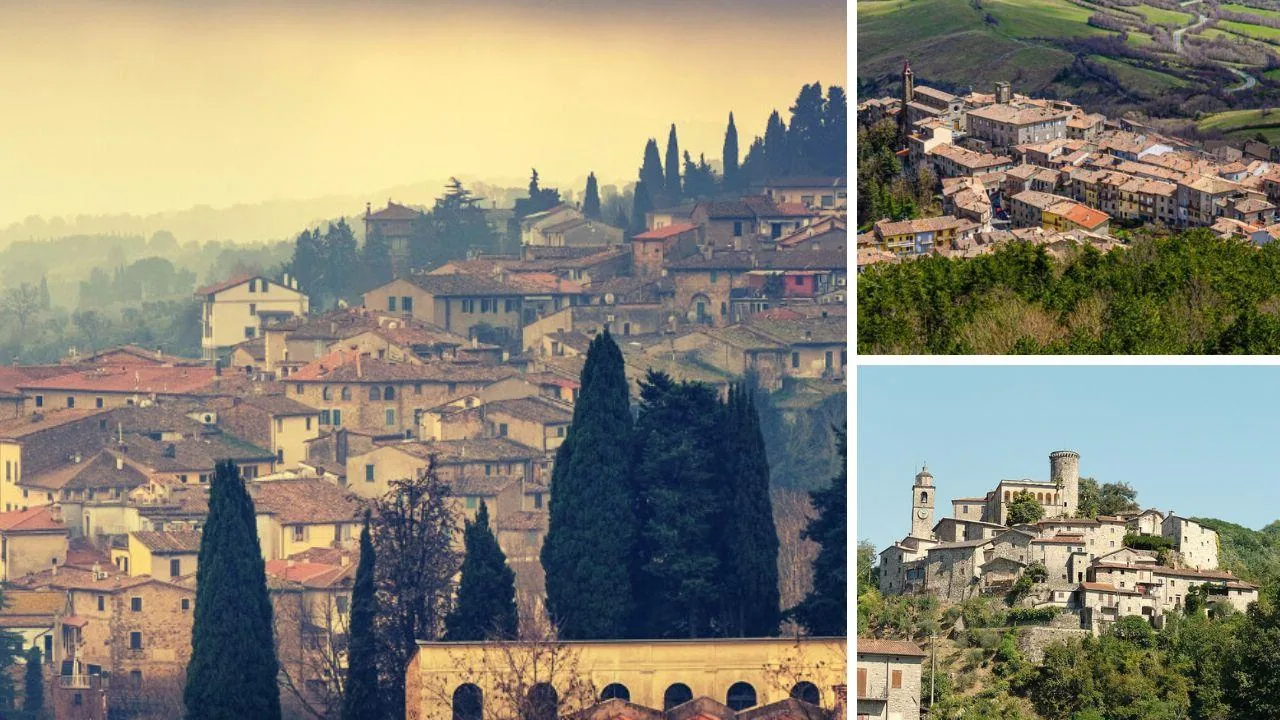
It is inland Tuscany: a mosaic of agricultural villages, towns perched on ridges, and rural traditions that stretch from Maremma to Lunigiana, passing through the heart of Garfagnana and Casentino. These are small municipalities, almost all with fewer than 5,000 inhabitants, which until a few years ago risked being cut off from the major economic arteries linked to tourist flows for a very simple reason: the almost total absence of traditional accommodation facilities such as large hotels or resorts.
Filling this void and bridging these micro-worlds and travelers worldwide has been a widespread network of citizens who have reopened the doors of their homes, especially with short-term rentals.
The data
The numbers tell the story of this transformation. In 2025, the total gross domestic product generated by tourists on the Airbnb platform in Tuscan municipalities with fewer than 30,000 inhabitants reached 48 million euros. An injection of resources certainly not to be underestimated, which surely brought a sigh of relief to the small and few commercial activities, artisan shops, and family-run trattorias typical of these places.
The map of the villages
The contours of this renaissance are traced by the Observatory on Widespread Tourism in Italy, created by The European House – Ambrosetti for Airbnb. The study highlights how a full 80% of the areas hosting Unesco sites in our country are located in small municipalities and that, in over 680 places that preserve Italian excellences, home hospitality represents the only available accommodation option. Without hosts, these historically rich territories would simply risk remaining invisible and off the radar of travelers.
The top spot
In the regional ranking of small Tuscan municipalities (under 5,000 inhabitants) that generate the most tourist spending thanks to platform guests, the province of Pisa takes the top spot. The first place goes to Chianni, a small jewel nestled between hills and woods, where visitors generated over 106,000 euros in direct spending in the area in 2025. Immediately behind are Bagnone, an enchanting village in Lunigiana with stone bridges and castles, and Pieve Fosciana, nestled in the green Garfagnana Lucchese. Following in the top ten are places of great historical and landscape value such as Londa, at the gates of Casentino, the walled Montecarlo, famous for its wine excellences, Fabbriche di Vergemoli, Ortignano Raggiolo, and Castel Focognano. Closing the ranking are Castell’Azzara and Castel San Niccolò.
Read more Weather in Tuscany, violent thunderstorms arriving: orange alert – The critical areas and hours
The Castell’Azzara case
Castell’Azzara itself, nestled between Monte Amiata and the Grosseto Maremma, represents one of the most emblematic cases because in the last two years, searches for accommodation on the platform have grown by 30%, demonstrating an ever-stronger interest in forms of travel in contact with nature.
Depopulation
Behind these numbers lies a much bigger challenge: the very survival of the villages. For some years now, depopulation has been emptying the Tuscan countryside and mountains, leading to the closure of village shops and the abandonment of homes.
However, research by Teha Group, also for Airbnb, shows that home tourism is becoming a real brake on this exodus. According to the research, in small municipalities, the increase in available accommodation leads over time to a concrete growth in residents. After a few years from the arrival of the first tourists, the villages reorganize, bars reopen, services reactivate, and communities breathe again.
Across Italy, in smaller centers, this system has generated 836 million euros, creating 4,600 jobs. But the most important effect is the chain reaction it triggers in the area: for every person working in hospitality, almost another is activated in related industries, including restaurants, artisan shops, and renovation work on old houses.
In short, while on the one hand the short-term rental market has often been blamed as the cause of housing shortages in cities, with consequent abandonment; in small villages – where overtourism is an unknown phenomenon – it seems to have the opposite effect.
© ALL RIGHTS RESERVED