








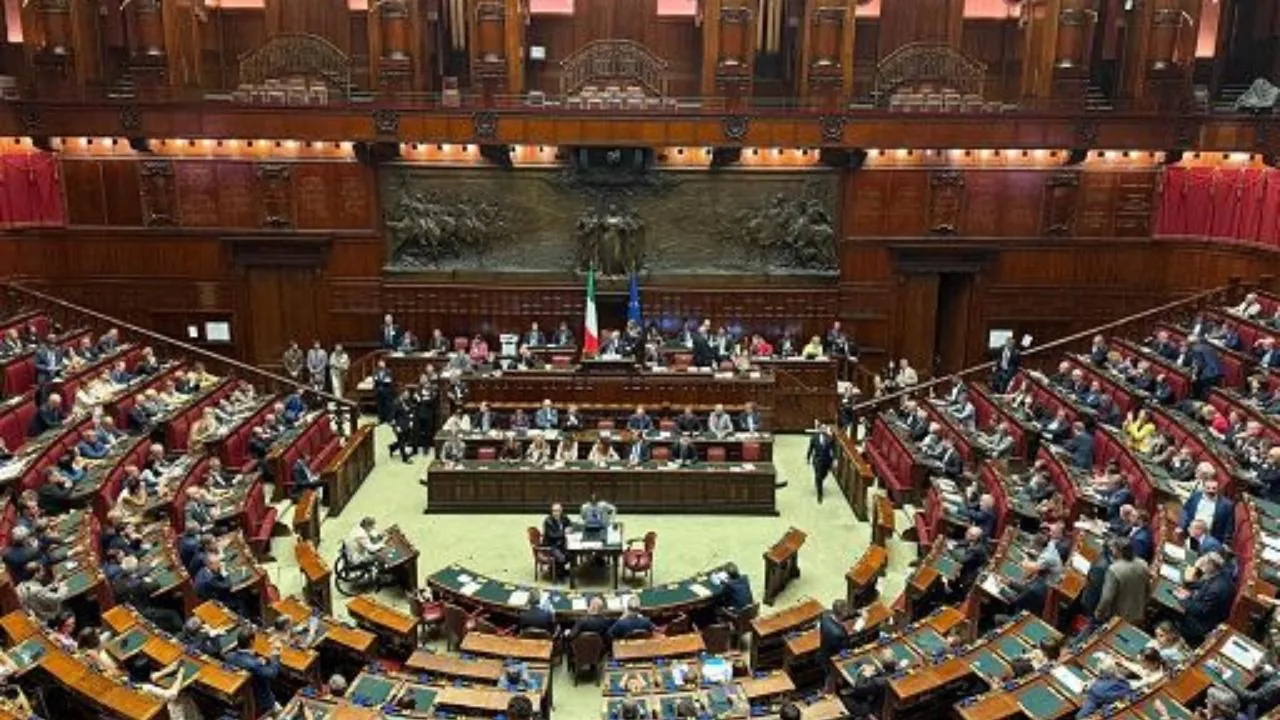
The Chamber Assembly approved – on the morning of Thursday, July 16 – the electoral law with 217 yes, 152 no and 2 abstentions. The measure now goes to the Senate for examination.
Read more Flights, green light for the reform: more protections and rights for passengers — The news
The new electoral law
A “mixed” system, proportional with a majority bonus, and parliamentarians elected through closed lists. Less than ten years after the last electoral reform – the so-called “Rosatellum” – the method of electing the Chamber and Senate changes again. Here are the innovations provided by the Bignami electoral law – named after the first signatory of the text, the Fdi group leader at Montecitorio – which obtained the green light from the Chamber and now goes to the Senate for examination.
Majority bonus
It is fixed, meaning it consists of a predetermined number of seats – 70 in the Chamber and 35 in the Senate – assigned, in both Chambers, to the list or coalition of lists that wins and has obtained at least 42 percent of the votes in each of the two Chambers. In the absence of such conditions – even in just one Chamber – the bonus is not assigned in either Chamber and the bonus seats are also distributed proportionally.
Seat cap
The majority bonus seats are added to those the winner obtained with the proportional part but the law establishes a maximum cap: 220 seats in the Chamber, 113 in the Senate. In case of exceeding the cap, the excess seats are subtracted from the list assigned the bonus in the proportional part. Seats elected abroad (8 deputies and 4 senators) are excluded from the maximum cap.
Closed lists
Single-member constituencies are abolished. The possibility of a preference vote is not provided. On the ballot, the voter will find only closed lists: those presented, possibly in coalition with each other, by individual parties at the level of each multi-member constituency (a maximum of six candidates next to each symbol) and those presented by single lists or coalitions of lists at the district level for the possible allocation of the bonus. These latter lists, in case of coalition, are the same for all the coalition lists: the composition of the so-called “big list” – which enters as a block in case of winning the majority bonus – is entrusted to internal agreements within the coalitions.
Threshold
The threshold remains at 10% for coalitions of lists and at 3% for single or coalition lists, except for the rescue, for each coalition of lists, of the first coalition list that remained below that threshold.
Anti-fragmentation rule
Votes cast in favor of connected lists that do not exceed the 3% threshold and that are not the best losing list do not count towards determining the national coalition electoral figure.
Indication of the prime minister
Political forces must indicate in the electoral program the first and last name of the person proposed for the office of Prime Minister, respecting the prerogatives of the President of the Republic regarding the appointment of Government members and what is provided by Article 67 of the Constitution, namely that every member of Parliament represents the nation and exercises their functions without a binding mandate. In case of coalition, the proposed person is the same for all coalition political forces. The name and surname of the prime minister do not appear on the ballot paper. Failure to indicate the name produces, as already provided for failure to present the program, the inadmissibility of the lists.
Candidacies
The law requires the presentation of lists in at least one third of the constituencies in the Chamber to be able to participate in the elections. Furthermore, the candidate in the district lists presented for the allocation of the governability bonus is required to run in at least one of the multi-member constituencies of the district in which the district list in which they are a candidate was presented, in one of the connected lists, in the position of lead candidate.
Signature collection
Parties that have a parliamentary group, in at least one of the two Chambers, constituted by December 31, 2025, will be exempt from the signature collection necessary for the presentation of the lists. The rule “saves” from signature collection groups like Azione, Avs, Noi Moderati while excluding Futuro Nazionale di Vannacci, Più Europa and the Liberal Democratic Party of Marattin. The possibility of collecting signatures digitally as happens for referendums was rejected.
Italians abroad
An article was introduced that entrusts the government with the task of updating, within three months from the date of entry into force of the new electoral law, the implementing regulation of the Tremaglia law to make the necessary changes to guarantee the freedom, security and secrecy of the vote of Italians abroad.
Overseas constituencies
The geographical divisions for the election of the Chamber of Deputies are reduced from four to two (Europe and Americas-Asia-Oceania-Antarctica) and from four to one in the Senate called the Overseas constituency.
Vote for non-residents
An electoral office list is established in each municipality of non-resident voters allowed to vote in the municipality of temporary residence for the elections of the Chamber and Senate, for the European Parliament and for referendums. By December 31 of each year, voters who are temporarily domiciled in a municipality located in a different region from that of the municipality of electoral registration for study and work reasons can request registration in the list to vote in the elections scheduled for the following year in the municipality of temporary residence if the expected duration of stay in the latter is at least 9 months. Voters who have reached 9 months after December 31, within thirty days from the date on which the non-resident requirements are met and in any case no later than the forty-fifth day before the election date, can request to be registered in the non-resident list where they are domiciled. Separate rules apply for voters who are away from the municipality of residence for health reasons. If they receive health care, therapy or medical treatment in a region different from that of residence for a period of at least three months during which the election date falls, they can request, no later than the forty-fifth day before the vote, to be registered in the non-resident list to vote in the municipality of temporary residence.