


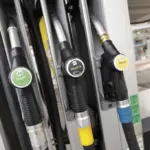



In times of crisis, the case of Valle Castellana shines bright, a village of just over 800 inhabitants in the province of Teramo where the only gas station is managed by the Municipality: the town hall buys the fuel and resells it without applying the profit margin that a private operator must add to survive. At the pump, this translates into a saving of about 20 cents per liter compared to a normal self-service station. And the fellow villagers are happy.
Why doesn’t everyone do this? One wonders, and we pose the question to Marco Filippeschi, former mayor of Pisa (2008-2018), president of the Province of Pisa (2014-2018), and national president of Legautonomie, the league of local autonomies (2010-2018), now executive director of Ali (Italian Local Autonomies).
Is “nationalizing” gas stations the proverbial Columbus’ egg?
«The choice of Valle Castellana is interesting, but it must be told for what it is. It is not a “nationalization” nor a recipe that all Italian municipalities could apply to lower the price of gasoline. It is above all the concrete and successful response of a very small mountain and internal area municipality, with 800 inhabitants, to the disappearance of an essential service».
What happened?
«When the only gas station ceased operations, for many citizens refueling would have meant traveling dozens of kilometers. The Municipality then leased the facility, took direct management, and today sells fuel essentially at cost price».
A commendable choice
«Under these conditions, it has a strong public interest justification: the legislation allows local authorities, when the market is unable to adequately provide a service necessary to the community, to organize it even through direct management, naturally respecting economic, fiscal, environmental, and safety regulations. Therefore, since 2022, the Municipality has not entered a functioning market to compete with private operators or to face the fuel price surge that came later. It intervened because the private operator was leaving and the last gas station risked disappearing».
A political choice?
«Today it may also seem like a call to a dithering government. In the moment of high fuel prices, seeing a Municipality that renounces profit and manages to save citizens 10 or 20 cents per liter is also a sign of protest. It does not prove that municipalities can solve the national problem, but that local institutions can and must stand on the side of citizens with courage and that, especially in internal areas, they must not resign themselves to the progressive closure of services».
Can the initiative be replicated? If so, by whom?
«It is not the only one in Italy and is replicable especially in small mountain municipalities and internal areas suffering from service desertification, worsened by government inertia and the choices of Minister Calderoli that have hit mountain municipalities specifically (reclassification, ed.). It would instead be difficult to transfer the same model to cities, where numerous gas stations operate and it would not be as easy to justify the Municipality’s intervention».
© ALL RIGHTS RESERVED


