



Sitting on the couch at home, Claudio Ciampi takes a photo from the coffee table in front of him and holds it between his fingers. His gaze softens as he looks at the photo. Then a smile. That image, over half a century old, with edges slightly faded by time, has survived moves, houses, seasons. And as Claudio looks at it, his thoughts travel hundreds of kilometers in an instant and arrive in Livorno. Because this is where his father’s story began, Carlo Azeglio Ciampi.
Read more Ten years without Carlo Azeglio Ciampi, he never stopped feeling part of a community
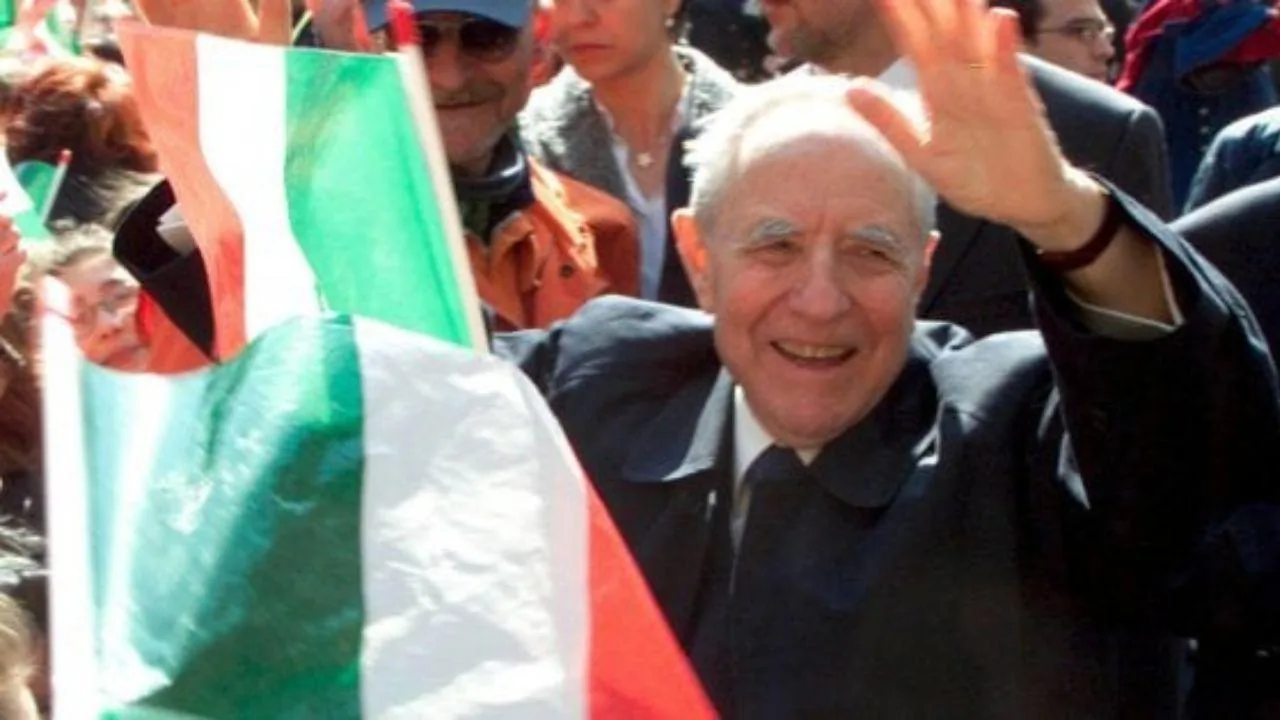
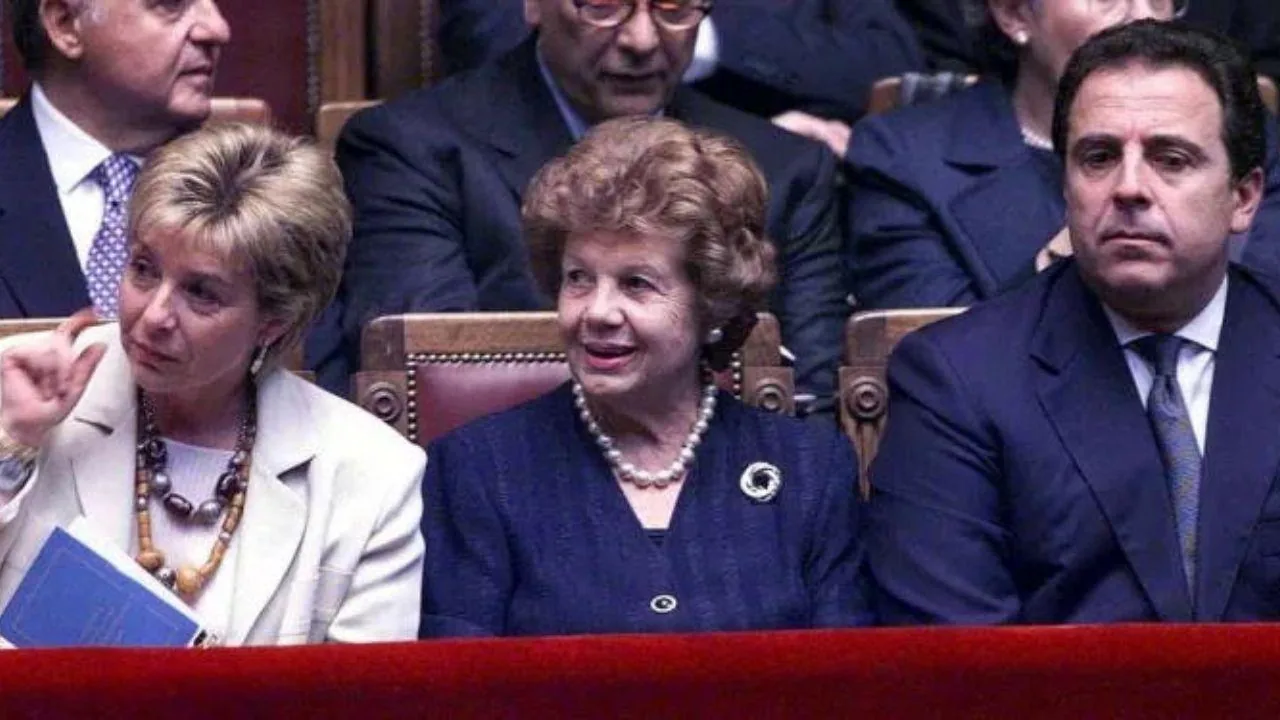
And it is precisely from here that the son wants to start telling his story, on the tenth anniversary of his death. It is June 23, 1999, and Ciampi – elected about a month earlier as President of the Republic – returns to Livorno, welcomed by a crowd, for his first official visit to his hometown. The Quirinale protocol dictates that he walks ahead and that his wife, Franca Pilla, follows a couple of meters behind. She does so, but only for that day. Back home, she tells her husband: “Under these conditions, I won’t accompany you: I will never walk behind you again. We walk together or, at most, I go ahead.”
From that moment, Franca will stand by him. Always. On official occasions as well as in private life. It’s a detail, but inside it holds a 70-year story: that of two young people who met in the university classrooms of Pisa, became husband and wife, then parents of two children, until they lived together at the Quirinale without ever ceasing to be, first and foremost, a couple. And perhaps it is precisely from here that one must start to tell Ciampi’s story. Not from the President, but from the man who, once home, left the ceremonial behind. From the loving husband, the strict and reserved but present father, the meticulous banker, the Livornese who outside the Quirinale simply became Carlo again.
Claudio Ciampi is now 73 years old, a retired bank executive, and keeps the memory of that father without ever losing perspective.
What kind of father was Carlo Azeglio Ciampi?
“He was above all a person in love with his family and especially with my mother. They were together for 70 years: between them there was a relationship of great intensity and love. Mom was outgoing, dad much more reserved. He was almost shy about his feelings, he didn’t like to show too much of what he felt. I never saw him angry.”
He says it almost with regret: is that so?
“It’s true. My father never laid a hand on me even though I did some foolish things, a bit like most kids (laughs, editor’s note)”.
How did he punish you, then?
“He ignored me and I became invisible for a few days. For me, that was a terrible punishment. Inside I thought: ‘Give me two slaps, so you vent and then it passes.’ The ‘domestic justice,’ so to speak, was entrusted to mom: small but formidable.”
What kind of family were you?
“A very normal, bourgeois family. Father, mother, two children. My sister Gabriella was much better than me at school, I’m not ashamed to say it. Dad was a constant presence, interested in our studies, our lives. We never lacked anything, but nothing was ever wasted. It was the spirit of someone who had lived through the war and the reconstruction.”
What were your vacations like?
“In July we were always in Livorno. We rented an apartment not far from Pancaldi, the historic baths where dad had learned to swim. He worked in Rome and commuted: he arrived Friday night by train and left Sunday night. Then in August we went for 15 days to the mountains and maybe returned a bit to the sea, this time to Elba. They were simple but beautiful vacations.”
What do you remember about him at home?
“He worked all day, came home and then studied. My childhood myth was that my father’s job was reading newspapers. In elementary school, I wrote exactly that in an essay, so the teacher asked my mother: ‘Excuse me, but what does your husband do?’ He was curious about this man who spent the day reading newspapers.”
Then you followed your own path and entered banking. How much did being Ciampi’s son weigh?
“It was a pleasant cross. If I got a promotion, it was taken for granted: ‘He’s Ciampi’s son.’ If I didn’t get it, I was doubly stupid (laughs, editor’s note): ‘He’s the governor’s son and they don’t promote him?’ My sister Gabriella was luckier because studying Literature and then continuing her career as a university professor of Contemporary History, she was outside the world of banks and finance.”
Did your father ever recommend you?
“Never. And he cared a lot about that. He said: ‘Everyone knows they are my children, but I don’t ask.’ He never lifted a finger for us.”
Was that a form of strictness?
“More than anything, it was a matter of principle. He said being his children should not become a merit title. If we were capable, we had to prove it ourselves. And I think it was better that way. When you get something because you are someone’s child, you never know how much of that result is really yours.”
Impossible that there was no advantage, though.
“Of course. If I had to talk to the president of a bank, I called and the next day I had an appointment. But that was the advantage: getting to the door. Then I went in and had to prove my worth.”
When your father became governor of the Bank of Italy, did you find out before others?
“No, practically last. And that says everything about dad’s discretion. I remember I was in Parma for a course. On Friday I went to greet the branch director and he said to me: ‘So there are big news coming.’ I asked: ‘In what sense?’ And he said: ‘Your father will become governor.’ I replied: ‘No, look, you’re wrong. It’s absolutely impossible.’”
And instead?
“I returned to Rome and dad told me: ‘Claudio, tomorrow they appoint me governor.’ On Monday I went back to Parma and the director looked at me suspiciously. He thought I had hidden everything from him. But I really didn’t know anything. Dad was a vault.”
Does that mean you didn’t talk about his work at home? He didn’t share his days with you?
“Never. We didn’t know what was happening at the Bank of Italy, we didn’t know how much he earned, we knew nothing. They were two separate worlds. After all, the Bank of Italy was almost a second family, since he stayed there 47 years, but his work didn’t enter the home.”
And then there was Livorno: what was your father’s relationship with his hometown?
“Livorno was his city. He said: ‘It’s the city where I was born, where I grew up, where I learned to know life.’ And one of the things he carried with him was the value of diversity, always seen as a richness and never as a threat. Livorno was a melting pot of religions and different people. Dad breathed this as a boy and carried it with him always. The friendship with Elio Toaff, who was the son of the chief rabbi of Livorno and later became chief rabbi of Rome, for example, was something absolutely natural for him. Dad was Catholic, he was Jewish: so what? For my father, that was exactly the point. You get to know each other, respect each other, enrich each other.”
What was he like when he returned to Livorno?
“He met childhood friends, went around wearing a t-shirt, bermuda shorts, and slippers. He found Villa Fabbricotti, the walk in Antignano and Ardenza. He was calm, serene, smiling. In Livorno he found himself again.”
You can’t talk about Livorno without talking about football: was he a fan?
“I remember a Livorno Serie A match. We came with dad and my daughter. Livorno scored, then Chievo equalized and in the end we lost. Aldo Spinelli started shouting, he was furious. Dad put a hand on his shoulder and said: ‘Calm down.’ It was a beautiful scene: the governor of the Bank of Italy, then prime minister, finally head of state, calming the president of Livorno.”
Was your father religious?
“Yes, but he was not bigoted. Once I asked him: ‘When you go to church, do you take communion?’ He answered: ‘When I am in the role of head of state, no; when I am a private citizen, yes.’ He separated the two roles. As President, he represented all Italians, thus the secularism of the state, and he did not want to confuse personal faith with institutional function.”
The other great dream was Europe.
“It was his dream, it’s true, but also, in the end, his anguish. He had fought in the war and told that before the conflict he studied with German boys. A few months later they were shooting at each other. He said: ‘This must never happen again.’ That’s why he believed in Europe.”
How did he experience the introduction of the euro at the time?
“When Italy joined the euro, he went on stage with Romano Prodi and waved the tricolor like a child. It seemed like we had won a championship. For him, Europe mainly meant no more borders and preventing future generations from living through a war.”
Ten years after his death, what do you think has been told less about your father?
“His humanity. As a man of institutions, he has been told a lot. He was a deeply good person. His former collaborators at the Quirinale still remember him like this: a smile for everyone and willingness to help when he could. He also loved volunteering very much, especially the kind done without appearing.”
When you were children, would you have ever imagined the path he would take?
“Absolutely not. My mother used to say: ‘Who knows if one day he will become director of the Macerata branch of the Bank of Italy.’ That, for a bank employee, was already the peak of a career. Instead, then everything happened. Certainly, he worked a lot, made sacrifices, had ability and also that dose of luck that is always needed in life.”
And how is your mother Franca?
“She is very clear-headed, reads a lot. She hasn’t left the house for ten years: since the President died, she prefers to stay at home. She has her people around her, the family. At 105 years old, she is a force of nature.”
It’s hard to think of Franca without Carlo and Carlo without Franca.
“You’re right. The architect of dad’s success was my mother Franca. She built around him that normality that allowed him to be who he was. Always together, hand in hand.”
Read more Marco Giorgetti is the new commissioner of Fondazione Toscana Spettacolo