







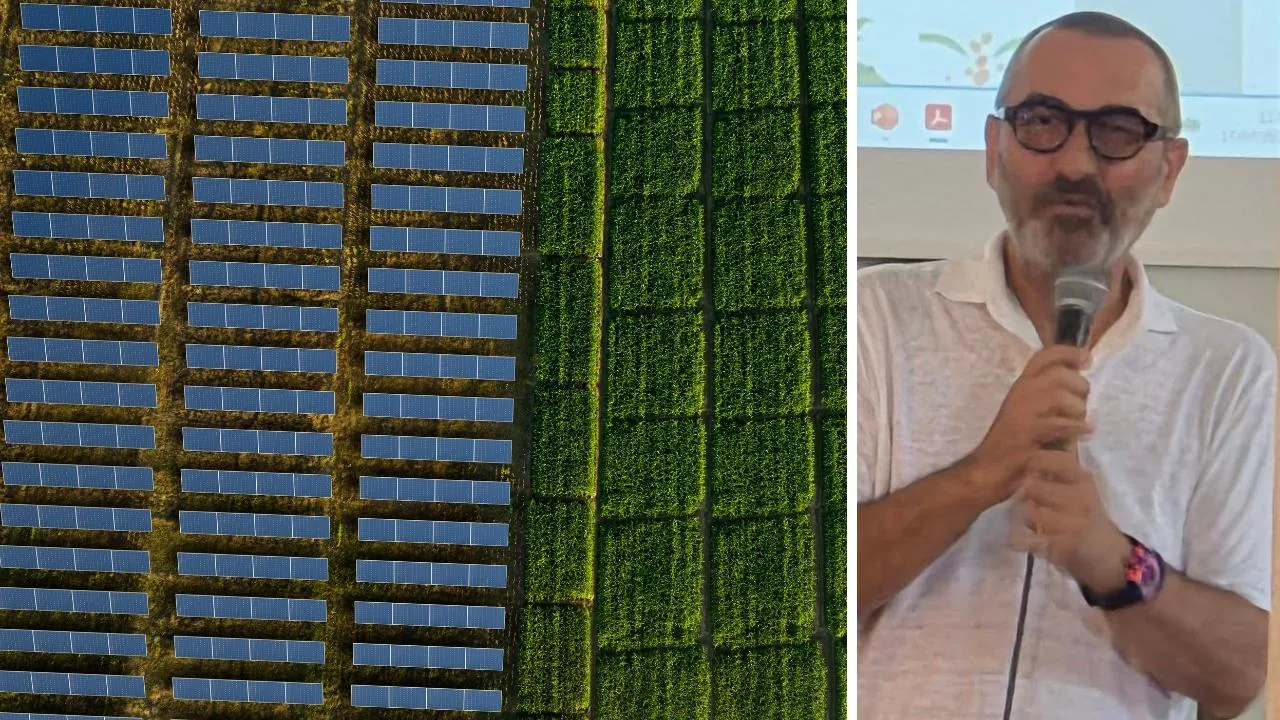
Renewable energy and rules. The recent ruling no. 127 of July 16, 2026 by the Constitutional Court introduces elements destined to significantly impact the discussion regarding the regulation of suitable areas for the production of energy from renewable sources. The Court declared the question of constitutional legitimacy regarding the prohibition of installing ground-mounted photovoltaic systems in agricultural areas unfounded, clarifying some principles that now become central in the political and technical debate. According to Giacomo Sanavio, rural development planning consultant, the decision marks a key turning point: «The Court recognizes that the protection of agricultural soil is a primary public interest, perfectly compatible with the objectives of the energy transition».
Planning as a tool for balance
The Court reiterated that territorial planning is the means by which to balance the development of renewables, landscape protection, biodiversity conservation, and the safeguarding of agriculture’s productive function. Sanavio emphasizes: «The ruling clearly states that indiscriminate installations cannot proceed: planning capable of harmonizing constitutionally relevant interests is needed».
Agrivoltaics yes, ground-mounted photovoltaics no
A relevant point concerns the distinction between traditional photovoltaics and agrivoltaics. The prohibition applies only to systems with ground-mounted modules, while agrivoltaic systems that ensure the continuity of agricultural and pastoral activities remain permitted. Sanavio clarifies: «The agricultural function must remain prevalent over energy production. Agrivoltaics is the only model compatible with agricultural soil».
Implications for the Tuscan regional law
The ruling comes as the Tuscan Regional Council is discussing the law on suitable areas. The principles expressed by the Court strengthen the legitimacy of a regulation that focuses on more precise planning, the role of municipalities, and the priority of already urbanized or compromised surfaces. Sanavio highlights: «Tuscany has full legitimacy to introduce rigorous criteria, enhance the role of municipalities, and prevent speculative uses of agricultural land».
Read more Superenalotto, July 23rd drawing: the winning numbers and the jackpot
“True” Agrivoltaics: criteria and proportionality
The Court reiterated that agricultural soil cannot be considered a freely available surface for energy production. Hence the need to ensure that every agrivoltaic system is truly integrated into agricultural activity. Sanavio explains: «Energy production must be a connected and accessory agricultural activity. Verifiable criteria are needed: proportionality between cultivated area and installed power, continuity of cultivation or grazing, prevalence of agricultural revenues over energy revenues».
The role of Municipalities
The ruling attributes a central role to planning, making a strengthening of municipal competencies in defining localization choices consistent. Sanavio adds: «Municipalities are the entities closest to the territory: they know the environmental, landscape, and agricultural peculiarities. It is logical that they have a decisive role».
A law that can become a national model
The energy transition remains a priority, but it cannot disregard the protection of agricultural soil and careful planning. For Tuscany, the law on suitable areas represents a strategic opportunity. Giacomo Sanavio concludes: «Tuscany can demonstrate that it is possible to accelerate renewables without sacrificing landscape, biodiversity, and agriculture. Planning based on the prevalence of the agricultural function and the integration between energy and rural development is the path to a sustainable and shared ecological transition».
Read more Netflix Refunds: you can request up to 500 euros – The form to fill out