




BOLOGNA. The Bologna Prosecutor’s Office has ordered the acquisition of phone calls in which residents requested emergency assistance, radio communications between the Police Headquarters operations room and the patrols that intervened on via Svevo, and contacts between the 118 operations center and the medical teams sent to the scene. This is one of the first investigative acts in the inquiry into the death of Abderrahim Fakir, the 42-year-old Moroccan citizen who died during a police intervention. The investigations are coordinated by prosecutor Paolo Guido and public prosecutor Domenico Ambrosino, while the investigations are entrusted to the Mobile Squad. The goal is to reconstruct the sequence of events and verify the content of communications between operators involved in managing the emergency. When the officers requested the intervention of 118, they reportedly indicated the presence of a man in an evident state of mental alteration.
Read more Tisg, what happens after Costantino’s farewell to the board? There are two potential buyers
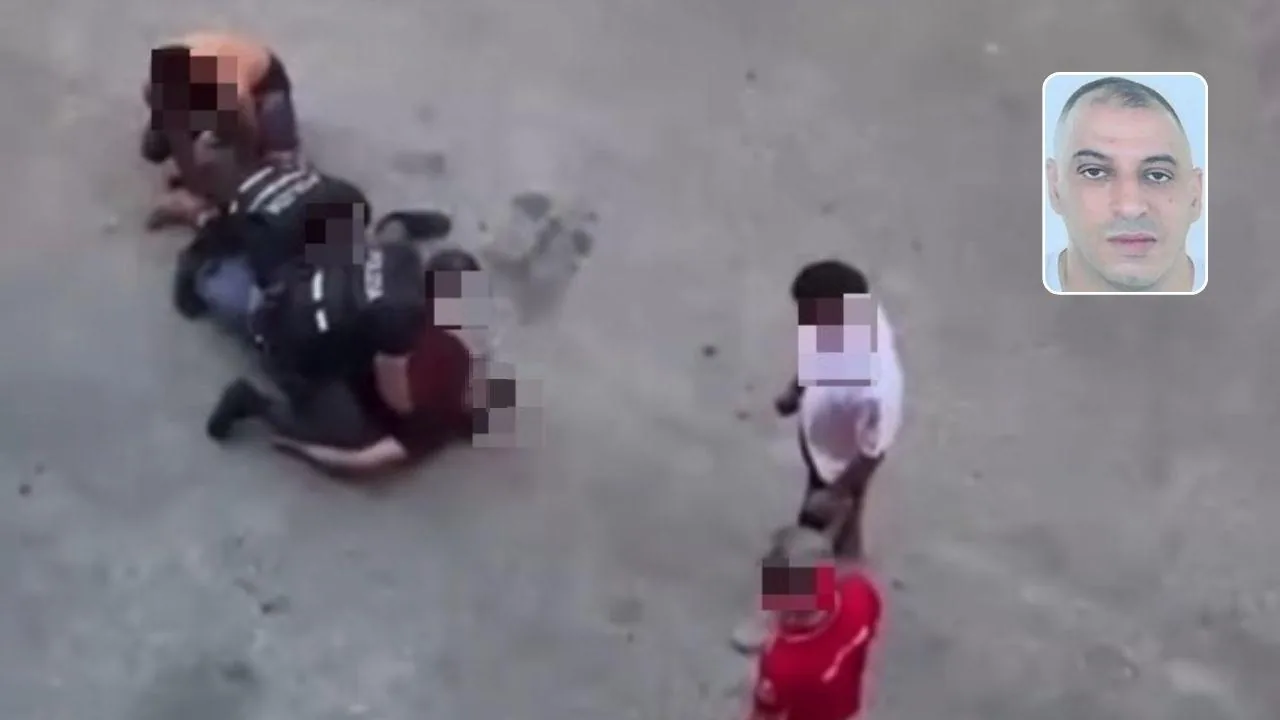
According to what has emerged so far, the incident would have started after phone calls from some residents who reported a man in a rage in the courtyard of via Svevo, where some garages are located. The 42-year-old reportedly verbally and physically attacked the driver of a car entering a garage and hit the shutter of a garage. Upon the arrival of the patrol, the man allegedly damaged the service car. The officers then reportedly used pepper spray before attempting to restrain him on the ground, meanwhile requesting the intervention of medical personnel. The man’s body showed injuries to the head and face, the origin of which will be clarified by the autopsy. Among the hypotheses is also cardiac arrest. The Prosecutor’s Office has also acquired footage made by some residents and the bodycam recordings of the two police officers involved.
The Prosecutor’s Office
Regarding the death of Abderrahim Fakir, the Bologna Prosecutor’s Office “has proceeded to register a proceeding, in a special ’45 bis’ model register, against those (two officers and four medical operators ed) who took part in the various phases of the prolonged intervention.” At the moment, therefore, there are no suspects, but the new legal shield rule is applied on the register for preliminary notes in which the names of subjects attributed with crimes committed in the presence of a possible justification cause are recorded.
“The investigations will take into account the entire development of the facts (over a longer time span than the video so far circulated online, also acquired by this office) and the intervention of both law enforcement operators and medical personnel,” explains a note signed by Bologna prosecutor Paolo Guido. The Prosecutor’s Office reports that “all necessary investigations will be carried out with the due legal guarantees, starting from medico-legal assessments, in order to quickly arrive at a complete and exhaustive reconstruction of the facts.”
Read more Fedez urgently hospitalized
The lawyer
The victim’s lawyer, Barbara Spinelli, spoke about the victim: “Stop prosecuting Fakir, who he was, what he did. He was a worker, he was kind. He was sorry to have had to lay off some employees due to the drop in work. Do you ask a raped woman how she was dressed when she was attacked, or what she did to provoke the rapist? No – Spinelli writes further -. Don’t ask who Fakir was. Ask why he died while in the hands of those who had the institutional duty to protect his life, because he was in their custody. Ask if we want to open a serious debate on the training and identification of police officers and work to have a democratic police force respectful of human rights, to avoid new Cucchi and Aldrovandi etc. etc. Ask if it is right to die in the hands of the State.”
Regarding his past, Spinelli clarifies that Fakir “had committed crimes already served 14 years ago,” emphasizing that “this element cannot be used as an argument.” According to the lawyer, the 43-year-old “never had any psychiatric history and the last time I saw him he was perfectly capable of understanding and willing.” Furthermore, after the reform of asylum legislation, she recounts “he feared being stopped and ‘deported’ to Morocco, a country he knew little about.”