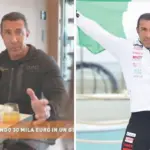

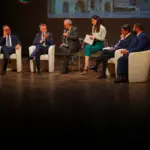





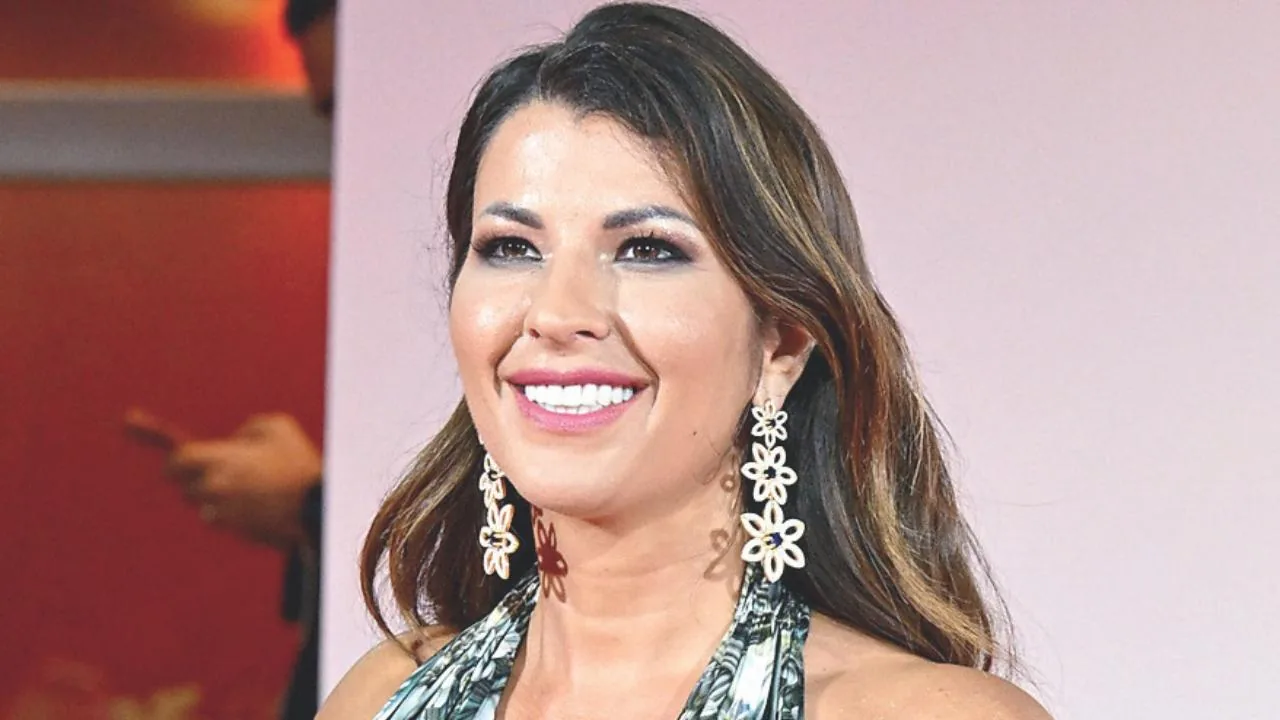
It has now become a point of reference when trying to delve into social issues, legality, family fragilities and, above all, adolescent distress. This is one of the reasons why Claudia Conte, journalist, writer, presenter and TV commentator, spokesperson for the National Observatory on Bullying and Youth Distress, is highly sought after in various parts of Italy to present her latest book (for “Fall in Lov”) titled “Where Silences Are Born”.
Read more Pisan Hills, the wind power business attacking our postcard landscapes
But how do you write a book talking about silences?
«Silences must be investigated. In a society where there is so much noise, it is often behind silences that fragilities hide, especially among the youngest. But also wounds, discomforts, which if not brought to light and resolved can turn into violence. From my position, as spokesperson for the National Observatory on Bullying and Youth Distress, I meet many young people and notice that many of them have increasing difficulty communicating with the adult world. There is almost a wall between generations, and so the book was born precisely to try, through a story in which one can identify (the protagonist of the book is an almost normal family), to bring out emotions. At a time when young people seem almost impervious to emotions themselves, experiencing distress. After the pandemic, as is well known, cases of altered mental health and social media addictions have significantly increased. According to data from our Observatory, young people spend between 5 and 7 hours a day on their mobile phones, inevitably taking that time away from real life, sports, human relationships, and volunteering. A change of pace is needed, investigating this generation as much as possible, especially in their difficulty communicating».
If I’m not mistaken, yours is a novel featuring a family. What characteristics does this family have?
«In reality, it’s a hybrid. It’s a novel with a non-fiction part, created in collaboration with the Ethno-Anthropological Research Center and the National Observatory on Bullying and Youth Distress itself. There are chapters dedicated to bullying, cyberbullying, and economic violence. It’s a true story, about a middle-class family, in which all of us can see ourselves. There’s an authoritarian, quite violent father, with a wife who is not economically independent, a situation that gives rise to a subtle, imperceptible situation, leaving no traces or wounds. It’s not physical violence, but only psychological, silent violence. The latest report from the Ministry of Economy and Finance tells us that one in two women, among those aware of or knowledgeable about economic violence, has suffered it. This connects to the issue of female employment, with Italy lagging behind (we are at 55%), and the fact that one in three women today does not have a bank account. In this regard, the book also aims to be an appeal to girls not to abandon their studies, to seek their own autonomy, precisely to prevent violence. This, of course, does not mean giving up family or becoming a mother. It is only necessary to be able to balance life and work. And the appeal is also for institutions, to provide more incentives for companies for female and youth hirings. Because then we face more and more young people leaving Italy for better opportunities in foreign countries».
And the children of this family?
«There are two children who live this scenario of daily violence, of continuous humiliations from the father towards the mother, and who remain silent. And these silences, of course, hide great wounds, great pains».
Read more Trains disrupted in Tuscany, power line fault: disruption on the Pisa-Rome line – Live updates
How should we interpret the book cover, which features a young girl turning her face to one side as if receiving a slap, and a hand and arm reaching out to her, almost as if extended for a caress. Is it a slap or a caress?
«Like all works, it can be susceptible to different interpretations. Some see it as a hand hiding violence, and others as a hand extended to bring and offer help. In the book, in fact, there is talk of violence but also of requests for help. Because one of the two children, Isis, the deity of resilience, rebirth, and the transformation of pain into positivity, manages to find her own way, to ask for help, to be helped. Asking for help does not mean being weak, but rather recognizing that you have a problem and allowing yourself to be supported in the process of taking back control of your life, also because we live in a society where evil makes much more noise than good. We journalists ourselves continue to focus more on the negative things happening around us, almost reaching an authentic sensationalism of tragedies. And all this, in the end, conditions the life of each of us, also in terms of trust in the future and in others. It is no coincidence that Pope Leo told journalists “Disarm communication,” precisely because words can sometimes be weapons and lead to hatred and violence, as happens on social media, often an agora of barbarism compared to freedom of thought».
Does an adolescent become fragile within the family, at school, or among friends?
«One thing does not exclude the other. We often talk about the alliance between educational agencies. Parents and teachers must form an alliance for proper education, yet we often see teachers delegitimized by the parents themselves, who instead of showing complicity towards the teachers, turn into true advocates for their children, ready for complaints or even aggressions. There is excessive permissiveness towards children, who are ultimately considered friends just because it’s convenient, not giving them the time they need. In essence, all those “no’s” that could help them grow are not enforced. Young people lack valid role models. Are parents role models? Are they consistent models? When they tell their children not to be on their phones all day, perhaps they are the first ones to be on them. And without role models at home, where do young people look for them? In television series, on social media, where too often there are no positive examples, talking about drugs, using violent language, launching very dangerous, sometimes deadly challenges, playing trap music with insults to women (who are, for example, called “bitch”, dog, slut, whore). When someone makes them carefully read the lyrics of certain songs, they understand, but initially they stop at the surface and do not grasp the seriousness of it».
What do you think about the ban on social media access for very young people?
«In an ideal and utopian world, social media should not be banned. Digital education should be provided, so that young people are aware of what they see and use certain tools responsibly. The problem is that digital education is not being done. It is a path that is only beginning today, and we will see its fruits who knows how many years from now. Therefore, to have an immediate response to the emergency, I agree with the hypothesis of limiting its use, because that is what is currently needed to address a situation of social danger».


