


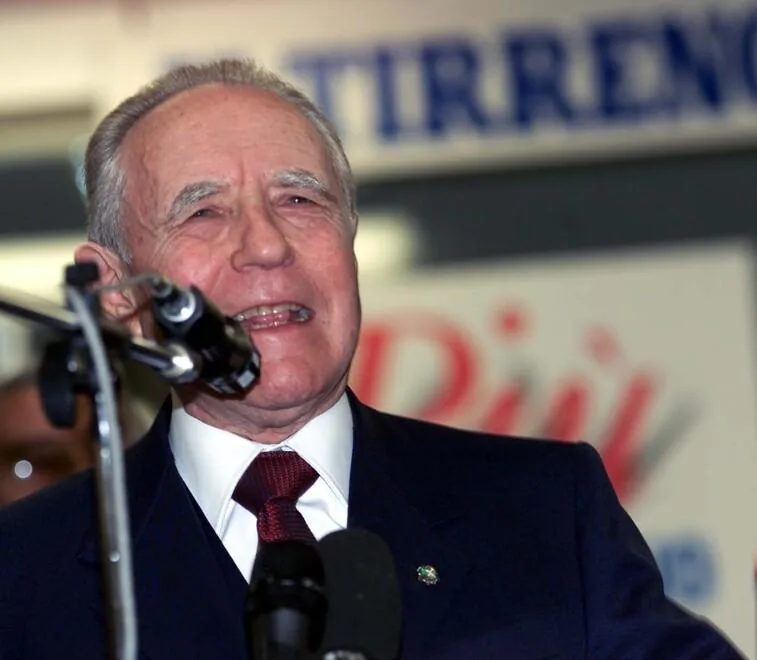
Il Tirreno was the first newspaper to openly support Carlo Azeglio Ciampi’s candidacy for the Quirinale. The director Sandra Bonsanti had a stroke of genius: she commissioned Swg to conduct a survey on possible candidates on behalf of the newspaper. Surprisingly, it emerged that Ciampi enjoyed the support of 52% of those interviewed (the people, if they had voted) against 46% for Emma Bonino and 37% for Lamberto Dini. He would have been voted for by 29% of Msi voters, 36% of the center-right, 42% of the center (the Berlusconians), 66% of the center-left, and 52% of the left, that is, of Rifondazione and Italian Communists. The news appeared in the newspaper on March 14, 1999, exactly two months before Parliament decreed his election. The comment on the survey was explicit: “Trust and ability” were the basis of the electorate’s choice. Trust arose from the fact that Ciampi was “the international guarantor of the virtuous path undertaken by the Italian economy towards Italy’s entry into the European single currency. Ciampi is the man who more than anyone else has been perceived by Italians as the main and consistent promoter of European integration…”. Abilities demonstrated as governor of the Bank of Italy, prime minister in 1993-94, minister of Economy and Treasury in the Prodi government and then with D’Alema.
But the newspaper also highlighted his moral and political path. Starting from youthful activism: “The activism of Parri, Foa, La Malfa, Leo Valiani and Altiero Spinelli… here lie the moral roots of Ciampi, the favorite pupil of Guido Calogero, the master of liberal-socialism.” Certainly, the article noted, despite popular support “the path is full of pitfalls.” But “the man has other important qualities. His independence and autonomy of judgment are unquestionable, his competence is beyond doubt… he is not a member of any party, but he is not against parties. He is a supporter of bipolarism… he is of secular formation, but he is a practicing Catholic.”
For Il Tirreno Ciampi was the president. But – it was finally asked also with a bit of superstition – “Will it be enough to overcome the cross vetoes that will be exercised with increasing force on his candidacy? Certainly, if it were up to the electorate to decide, perhaps the outcome would not be so uncertain.”
The cross vetoes did not fail, nor did the pitfalls (some brought up that he was a member of Freemasonry, he threatened to sue and the unfounded insinuation was withdrawn) but on May 13 Parliament elected him to the Quirinale. Sandra Bonsanti’s Il Tirreno had seen correctly: the support that informed our position in those two months certainly did not arise from provincial parochialism, but from the sense of value and European vision, of the profound democratic morality testified by Carlo Azeglio Ciampi.
And Livorno? The satisfaction and pride were shared by all. The newspaper collected a flood of memories, testimonies, comments. Furio Diaz, a lifelong friend (as a soldier he had been his “commander”: «I sent him to sleep at home») recalled that Ciampi came to Livorno every weekend for decades: visit to his brother and nephews, visit with discussion at Furio’s, lunch with Beppino’s cacciucco at La Barcarola. Under the radar and less frequently he continued even as president (Beppino brought the cacciucco directly to the Quirinale). His first official visit was to Livorno, as was the last in 2006. He loved his city, «positive, open, generous». He spoke a classic Livornese, like the old intellectuals, like Diaz, Badaloni, Castelli, Bartalucci, Galletta, Fontanelli. The generation that emerged after the war, after the years of fascism. He openly said he did not like «your de’», but passionately sang «amaranto è la nostra bandiera». When he met the Livorno team the first he hugged, skipping the line, was Protti. Just as when he came in 2002 to visit Il Tirreno the first to greet him festively was Luciano Ciriello, the historic photographer who had worked for years in the Ciampi family’s optical-photographic studio. «Oh Ciriello, how are you?» he said as soon as he saw him, and from prince Caracciolo downwards everyone else had to wait for the president to shake their hand. This was the straightforwardness and humanity of our president.
In 1995, when he was just a private citizen, he came to the Rex for a conference on Europe promoted I don’t remember if by the Rotary or the Lions. At the end I introduced myself and asked Ciampi if I could report the summary of what he had said with his signature, as if he had written for us at Il Tirreno. Of all the politicians I have met (starting, from my experience, with Giorgio Napolitano) no one would have agreed. An unknown reporter from a local daily, what a presumption! Instead Ciampi accepted, without asking to reread it, and the article was published with his name prominently displayed. Thank you, I say again, president.
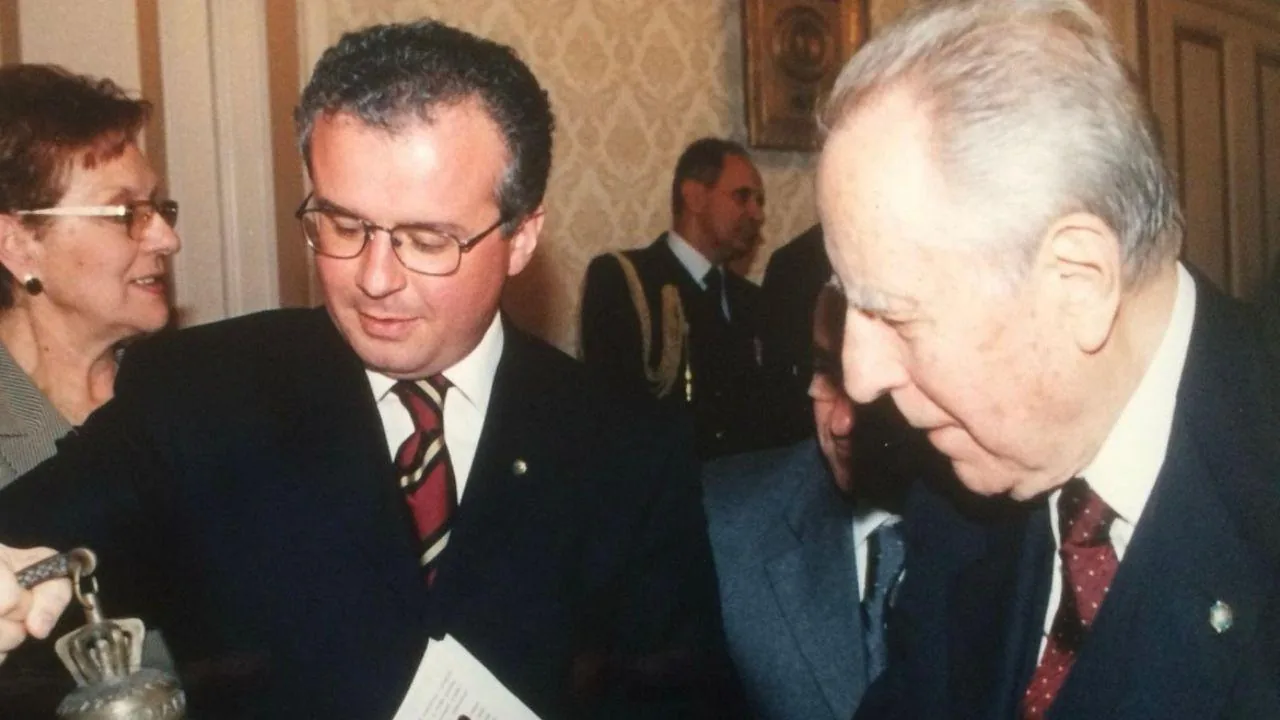
Having left the presidency, he was already over eighty, the first serious illnesses came. Every year, for his birthday, the Municipality sent him a message of congratulations. When I became culture assessor, I talked about it with the director, dear friend Roberto Bernabò. Because this year (2010) – we said – why don’t we go visit him and give him our wishes in person? Bernabò made contact with the Senate to arrange an appointment, I set about collecting in an album the most significant photos of his visits to Livorno, we gathered some people, admirers and friends of the president. And we went to Rome. He had the generosity, despite being ill and having difficulty speaking, to entertain us for an hour. He had the sweet and severe look as always, his hand trembled a little, his speech broke from time to time. But happiness could be read in his eyes: Livorno still remembered him, with ancient love. He is buried in the family tomb at the Misericordia cemetery.
(* journalist and writer)
Read more Ten years without Carlo Azeglio Ciampi, he never stopped feeling part of a community