
FLORENCE. “In the face of these tragedies, it is always said that we must… But that is not enough. We must act.”
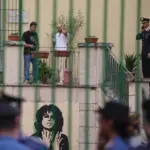
This is the warning from Simona Mattolini, widow of Luigi Coclite, an Abruzzo worker transplanted to the province of Livorno who died on February 16, 2024, in the collapse of the Esselunga construction site on via Mariti in Florence along with Mohamed Toukabri (54 years), Mohamed El Farhane (24), Taoufik Haidar (45), and Bouzekri Rahimi (56). “A wound in the heart of our city,” defined it Mayor Sara Funaro on the second anniversary of the massacre, at the ceremony in memory of the victims.
At the same time, the Prosecutor’s Office has closed the investigation into the accident that occurred shortly before 9 a.m. that Friday morning two years ago: the hypothesis is that the collapse was caused by calculation errors in the design of the beam and by hurried work “to maximize profits.” Eight people are under investigation, in various capacities, for building collapse, administrative offenses, negligent injuries, and negligent homicide. Meanwhile, the construction site in the capital is still under seizure. In early May, the builder submitted the necessary documents to the Municipality to demolish and then rebuild from scratch. Just hours after the death of Kumara Gedera, Mattolini returns to call for safety in workplaces.
What did you feel when you heard about Gedera’s death?
“When I read these news, I feel anger because nothing is ever resolved in terms of safety. And for a family that is now condemned to go through what we went through. In recent days, there have been two work-related deaths in Tuscany (four in Italy, editor’s note), and it is not over yet.”
How can you communicate to a family that a loved one has died at work? What are the “right” words?
“You can’t. There are no ‘right’ words to tell parents, a wife, and children that their son, husband, and father is no longer there because he died at work. I wouldn’t know what to say to Gedera’s family; at the time, I myself did not want to hear anything from anyone. Rather, we must prevent these things from happening again. But I know it won’t be like that.”
Will you personally take an active role in this regard? Will you establish an association…
“At the moment no, I wouldn’t have the possibility to follow a structured project. But I do not rule out doing so in the future.”
What can be an acceptable reaction in the face of tragedy?
“In these cases, there are always those who make a big show of good intentions, but in my view, nothing ever changes. Those responsible must follow through on those intentions. And always keep attention high on the problem.”
Who should act? And how?
“Those who say that investment in safety is needed. Also institutions and unions, but it should not be limited to them. Civil society must also and above all intervene, that is, ourselves. It is necessary not to lower our guard, and to talk and write every day about what unfortunately happens. There are still too many deaths.”
The dynamics are still under investigation, and Gedera worked in a model company regarding safety protocols.
“It is a complex issue, in which the aspect of safety is a priority. The issue is linked to profit logic: it is a ticking time bomb.”
What does yet another work-related death represent for your family?
“It reopens a wound that has not yet healed. We still have not resolved anything. We are waiting, after the closure of the investigations, to know the names of the people who will have to be brought to trial: no one has told us anything yet (almost six months have passed since the end of the investigations, editor’s note). More than two years have passed since that day, but our case has not yet started.”


