
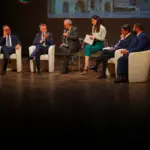




A long-term strategy to counter coastal erosion, protect settlements and infrastructure, and make the Tuscan coastline more resilient to climate change. This is the goal of the new 2026 Coastal Masterplan, presented by the President of the Tuscany Region Eugenio Giani and the Councillor for Environment, Circular Economy and Reclamation David Barontini. Also present was the Director of Civil Protection and Soil Defense Giovanni Massini.
Read more Fabio Grossi dead, actor and life partner of Leo Gullotta
With the approval of the new “Regional guidelines for the definition of strategies, actions, monitoring, study and research activities for coastal protection,” the Region is equipped with a unified framework to plan interventions along the entire Tuscan coastline.
The economic framework measures the challenge, as explained by the Region in a note: over 15-20 years, interventions worth 547 million and 710 thousand euros are planned. In the first ten years, the estimate is about 166 million euros, of which over 134 million are allocated to structural interventions, about 28.4 million to seasonal restoration and reshaping activities, and 2.8 million to study and research.
Already allocated 77 million euros
These resources are added to about 77 million euros already funded, related to interventions that follow the logic of the Masterplan, some already completed and others underway.
«We have approved the Masterplan of interventions to counter coastal erosion in the Council – said Giani – a plan that looks to the next twenty years and, precisely for this reason, foresees very important structural interventions, with a total potential of over 500 million euros.»
Versilia and Massa-Carrara among the most critical areas
According to the President of the Region, the most critical situations are concentrated in the northern part of the coast, from Versilia to the province of Massa-Carrara.
«The most significant emergencies are found in the northern part of the Tuscan coast, from Versilia especially to the province of Massa-Carrara, also in relation to the need to carry out interventions that complement the presence and structure of the Marina di Carrara port.»
The plan nevertheless looks at the entire regional coastline, from Punta Ala and Follonica to the Uccellina Park, identifying different needs and priorities for each stretch.
Focus also on Tirrenia and Marina di Pisa
In the coming months, attention will also focus on Tirrenia and Marina di Pisa, based on the study carried out with the University of Florence.
The goal is to intervene on barriers capable of mitigating the impact of wave motion, particularly in coastal stretches where densely populated areas are also present.
For Marina di Pisa, 7 million euros have already been allocated for the so-called “cell 4,” with the modification of the current gravel beach and its extension of about 70 meters.
«The PNRR did not finance the interventions»
The issue remains that of resources. Giani recalled how the P initially envisaged significant funding to counter coastal erosion, but such resources did not materialize.
The Region therefore mainly relies on European structural funds and the new seven-year programming of the ERDF from 2028, while also hoping for new national funding.
A plan to overcome the emergency logic
Coastal erosion represents one of the main environmental challenges in Tuscany. The Masterplan aims to overcome a management based solely on emergencies, building an organic medium- and long-term strategy.
«The purpose of the Masterplan – explained Councillor Barontini – is to provide an organic vision and long-term programming for interventions against coastal erosion.»
The identified horizon is twenty years, with interventions tailored to the characteristics of individual coastal stretches.
Massa-Carrara, Cinquale and Follonica under observation
Among the situations requiring greater attention is the province of Massa-Carrara, starting from the mouth of the Frigido, where the retreat of the coastline is particularly evident.
Other criticalities have been identified in Cinquale and Follonica.
«Beaches are not only holiday and tourist attraction places – emphasized Barontini – but represent a natural defense of the territory and the settlements behind them.»
Read more Savona, lifeguard dives to save a couple at sea: dies along with the man
Over 462 million for structural interventions
The Masterplan also details the different coastal areas, identifying needs, priorities, and an estimate of necessary interventions for each physiographic unit.
The largest part concerns the stretch between the mouth of the Magra and Livorno, for which interventions worth over 189 million euros are estimated, of which about 44.6 million in the first ten years
For the Punta Lillatro-La Torraccia stretch, the overall forecast is about 49.4 million, with 23.7 million in the first decade
For Baratti-Follonica-Punta Ala about 45.9 million, of which 17.4 million in the first ten years
For the Punta Rocchette-Cala Rossa unit, the estimate reaches 51.9 million, with 22 million in the initial decade
For the Talamone-Osa-Santa Liberata-Feniglia stretch, about 57.1 million are planned in total, of which 17.9 million in the first ten years
Added to these are the interventions planned between Ansedonia and Chiarone, those on the so-called “pocket beaches,” smaller-sized beaches, and interventions specifically aimed at defending coastal settlements
Overall, for structural interventions, the Masterplan estimates over 462 million euros, of which about 134.8 million in the first decade.
The goal: recover sediments and reduce erosion
The regional strategy also aims to enhance sediments already available along the coast, following circular economy principles.
The Region has started a process with Ispra, Arpat, and the Lamma Consortium to promote, when possible, the reuse of materials in erosion control interventions, reducing reliance on external resources.
«We cannot return to the coast of a century ago»
Director Massini emphasized that the goal cannot be to rebuild the coast of the past.
«Thinking of returning to the situation of the coast a century ago is not realistic. Already managing to substantially maintain the current coastline, accompanied by localized improvements in the most critical situations, such as Massa, represents a very challenging goal.»
According to Massini, climate change has accelerated erosion dynamics, making phenomena that in the past developed over many years occur more rapidly.
Permanent coastal monitoring
The Masterplan finally provides for a permanent system of monitoring, study, and research. The control of the coastline evolution will be entrusted to the Lamma Consortium, with particular attention to the most vulnerable areas and verification of the effectiveness of interventions already carried out.
The plan will be updated over time based on the evolution of knowledge and the contribution of local authorities, universities, research institutes, associations, and other involved parties.
Interventions will be progressively implemented through the annual Operational Document for the recovery and rebalancing of the coastal strip, based on identified priorities and the resources actually available.
Read more Fuel price surge, new short extension then targeted aid: what the government is studying