







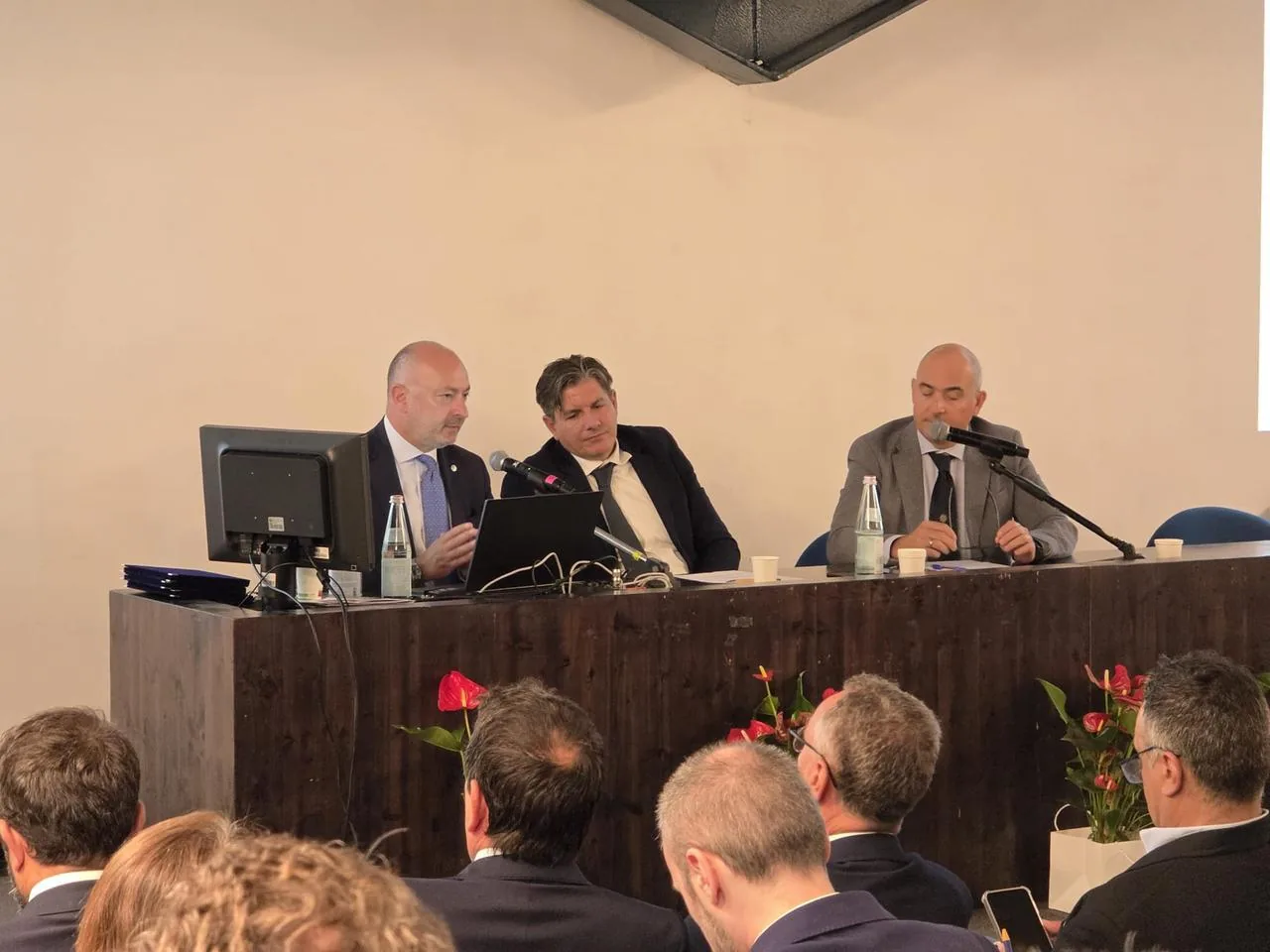
FERRARA. «For a terminal operator, dredging is not just an environmental or technical issue: it is an essential condition to ensure the operability of the berth, fulfill commitments made to shipowners, and maintain the competitiveness of the port.» This is the message delivered by Stefano Mordeglia, General Manager of Sige, speaking on behalf of Assiterminal, at the technical session dedicated to “Sediments, dredging and reuse,” held in Ferrara as part of RemTech Expo.
Read more Thunderstorms, extended weather alert in Tuscany: all affected municipalities
«The variable that governs the competitiveness of a terminal – Mordeglia emphasized – is not the nominal depth, but the certainty of the available depth when the ship arrives. One meter of draft missing that day can result in cargo lightening, waiting for the tide, reduced payload, or, in the worst cases, diversion to another port.»
Hence the need, according to Assiterminal, to move beyond a logic of episodic interventions and guarantee for each Port System Authority a structural and predictable programming of maintenance dredging, with defined volumes, material destinations, and financial coverage, along with multi-year authorizations and fixed timelines for the approval of material management projects. Within the framework of the port reform currently under parliamentary review, operators are closely watching the simplification of procedures and the integrated and circular management of materials, while highlighting the need to ensure continuity also for ordinary maintenance.
Another central aspect is the relationship between depth and the condition of the quays. Deepening the seabed in front of existing structures can affect the geotechnical conditions and safety of infrastructures often built several decades ago and now subjected to increasing stresses, also due to the size and power of new generation ships. For this reason, according to Assiterminal, a dredging project cannot concern only the sediment but must also consider the condition and stability of the quay. Port System Authorities and concessionaires should also jointly build a true “berth dossier,” through periodic bathymetries, underwater inspections, and infrastructure monitoring.
A necessity made even more evident by naval gigantism, which affects containers, cruises, and large oil & gas units and requires terminals to plan today infrastructures intended to serve the ships of the coming decades, considering together depths, berth lengths, maneuvering spaces, and quay capacities. The comparison with major Northern European ports also shows how seabed maintenance can be managed as a recurring industrial process, through monitoring and programming of interventions and material destinations. An approach particularly important for Italy and its canal ports, where morphological and hydrodynamic characteristics make it necessary to move from single dredging campaigns to a regime of continuous authorized maintenance, based on multi-year monitoring and characterizations.
Read more Tuscan healthcare, Meyer changes: the new Pediatric Medical Hub is born
Finally, central is the destination and reuse of sediments: reclamation basins, replenishments, deposits, and reuse possibilities must be planned together with excavation interventions, because without a certain outlet for the materials, even the simplification of procedures risks not resulting in greater availability of depths.
Three, therefore, are the priorities indicated by operators: multi-year programming of maintenance dredging; integration between dredging and quay safety; continuous maintenance of canal ports accompanied by programming of the destination and reuse of materials.
«For the terminal operator – Mordeglia concluded – a simpler rule is not enough. A predictable rule is needed. If I know when and how much dredging will be done, I can sign a contract. If I don’t know, I can’t.»