





MASSA MARITTIMA. In a world now racing towards artificial intelligence, there are those who, despite running faster than almost everyone else, urge to pull the handbrake. Asking for rules, controls, and above all time before machines become so powerful that they escape human ability to govern the consequences.
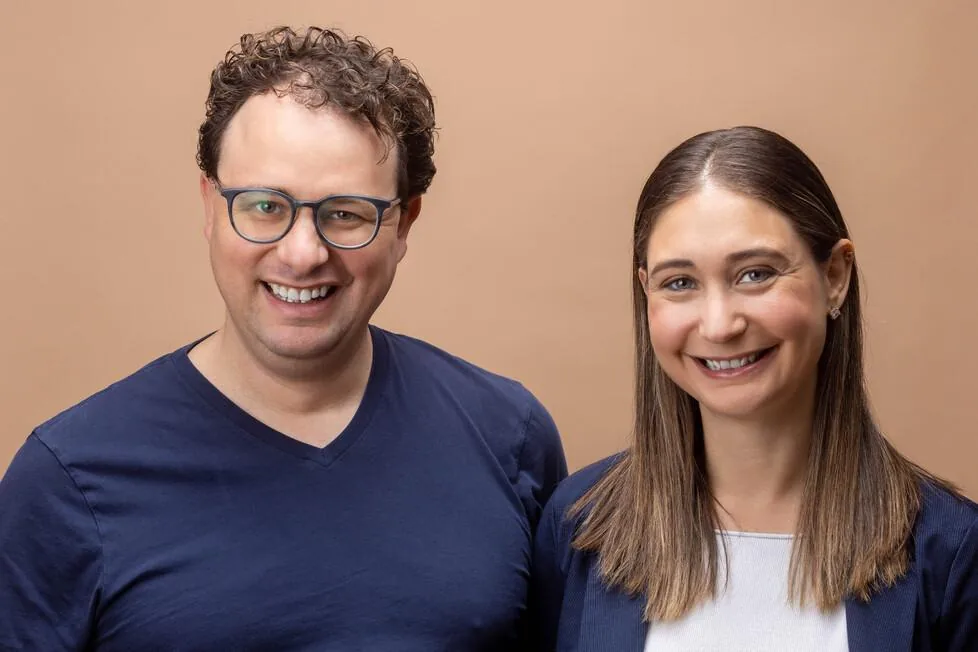
This is what Dario and Daniela Amodei are doing, two of the biggest names in the Silicon Valley and among the most influential people in the world. Brother and sister, they are the founders of Anthropic, the high-tech company that created Claude, one of the main competitors of ChatGpt. However, Amodei is a surname that evokes some Italian town more than the suburbs of San Francisco. And indeed, the story of the two siblings has roots in Maremma, in Massa Marittima (Grosseto). Their father Riccardo Amodei was born here in 1950, himself the son of a family that came from Trentino and settled in the Metalliferous Hills. In the city of Balestro, Amodei senior was a leather craftsman, in years when the first signs of the crisis that later hit the mining sector began to be felt. In Massa Marittima, Riccardo met Elena Engel, a U.S. citizen from Chicago who had arrived in Italy. They married and in the early 1980s crossed the Atlantic, heading to California. In San Francisco in 1983 Dario was born and, four years later, his sister Daniela.
Today Dario is CEO of Anthropic, Daniela is president and leads the board of directors. The company was founded in 2021 by a group of former OpenAI employees, the company that developed ChatGpt, precisely due to disagreements over the approach to artificial intelligence. Dario Amodei had joined it in 2016, at the dawn of the start-up, then rising to top roles in development, research, and security. Before that, after studying physics at Stanford and earning a PhD in biophysics at Princeton, he had also worked at Baidu and Google. Daniela, on the other hand, followed a different path: humanities and music studies at the University of California at Santa Cruz, then experiences in politics and especially at Stripe, a giant in digital payments. She too joined OpenAI two years after her brother. Between 2020 and 2021, the two siblings left the AI giant in disagreement with the development methods: according to their philosophy, this technology must indeed be developed, but it must also remain controllable by humans.
From this ethical approach Anthropic was born, which in 2023 developed Claude, a set of language models in a nutshell. The company defines itself as a “benefit corporation” and has built its identity around three “H”: “helpful, honest and harmless.” For example, in early 2026 the company clashed with the Pentagon, which, in view of a $200 million contract, had asked to remove some restrictions on Claude, so as to apply it to surveillance systems and automatic weapons. Anthropic refused and the Pentagon put it on a “black list” (later removed after a court ruling).
Nevertheless, this ethical approach has not prevented Anthropic from becoming a giant, quite the opposite. In February the company had raised $30 billion reaching a valuation of $380 billion. A year earlier, in March 2025, Anthropic was worth just over $60 billion. But according to sources reported by Ai News, a site that monitors the progress of artificial intelligence, Anthropic is expected to debut on the stock market in October with a valuation exceeding $2 trillion.
Yet, while Anthropic’s growth takes on exponential traits, the founders urge caution. The Amodeis have long insisted on the possible consequences due to the application of intelligence to the world of work, and beyond. In a treatise published a few days ago, Dario Amodei said he is convinced that artificial intelligence within 5-10 years could help cure many diseases (in this he makes direct reference to his father, who died in 2007), accelerate economic growth, creating a world of “abundance and development,” including “a renaissance of democracy and freedom”; but on the other hand, he also hypothesizes that, if uncontrolled, artificial intelligence could eliminate jobs, even take control of the situation. In a recent interview with CBS, Dario Amodei warned of the danger that artificial intelligence without adequate measures could take control of the internet in a few months. The Amodeis also spoke of possible cyberattacks, failed tests, even the risk of possible bioterrorism episodes. Hence the appeal to the industry giants to slow down uncontrolled development, subjecting it to more rules, controls, and checks. An opinion shared by other big names, from Elon Musk (who is developing Grok) to his closest competitor Sam Altman, CEO of OpenAI. However, the same cannot be said of those who could regulate this sector from above. Namely, the President of the United States Donald Trump, who, following the Amodeis’ departure (Daniela also shares these concerns), dismissively called the alarms “negative forces raising the issue without reason” and instead relaunched the race for artificial intelligence against China (which, incidentally, agreed with Trump, calling it “alarmism”).
Beyond the excesses of caution, the questions with an eschatological flavor remain: if artificial intelligence will come to do everything, what will be the role of the human being? A global question that somehow retains a small Maremma thread, from which the Amodeis’ parents started. Today in Massa Marittima there seem to be no particular traces left of the Amodei family. No close relatives are found and even the mayor Irene Marconi in recent months has tried to reconstruct those roots without finding particular family ties still present in the area. Yet, it all starts from a Tuscan craftsman who in the 1980s decided to follow his wife to her native country.
© ALL RIGHTS RESERVED