






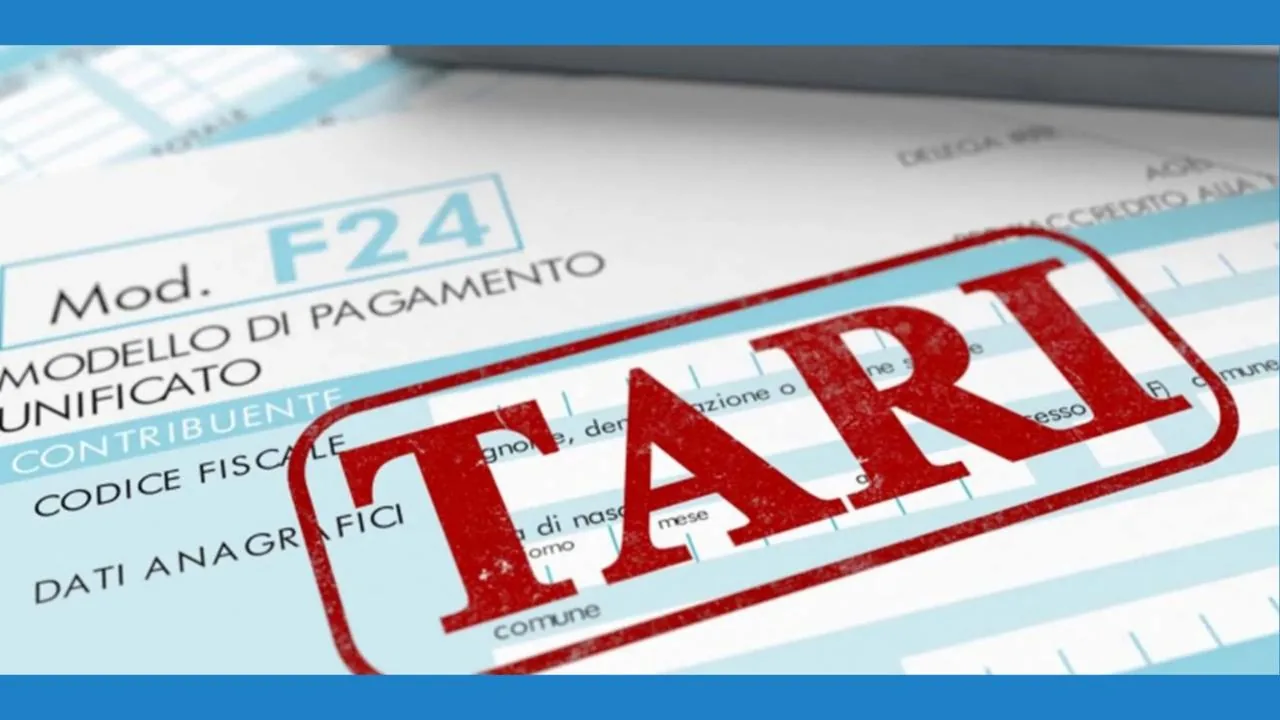
When the waste collection service is not guaranteed or presents serious irregularities, the law requires Municipalities to apply a significant reduction in TARI. This is not a political or regulatory choice: it is a precise obligation. In the most extreme cases, the taxpayer must pay a maximum of 20% of the fee, while in unserved areas the share cannot exceed 40%. In addition to these measures, there is a 25% social bonus for those with a low ISEE and the concessions that each Municipality can autonomously decide.
Read more Fuels, in Tuscany, sky-high prices for diesel and petrol: the perfect storm is unleashed on holidays
The principle: the tax is due for the property, not for the use of the service
TARI applies simply by occupying a property, regardless of whether the service is used. However, case law has clarified that when collection is absent or severely compromised, the Municipality cannot demand the full amount: it must adjust the fee to the actual provision of the service.
What the law says: “technical” reductions
The regulatory reference is Article 1, paragraph 656, of Law 147/2013. The provision establishes that, in case of non-collection, prolonged interruptions or serious violations of service rules, the fee must be reduced by up to one fifth. The Court of Cassation has defined these reductions as “technical”, i.e., linked to the objective decrease in service costs and applicable to an undifferentiated plurality of users. They are not discretionary concessions: they are automatically due when the conditions provided by law occur.
The most common misunderstanding: what “20%” really means
Many portals misinterpret the rule. The “maximum measure of 20%” is not the discount, but the remaining amount to be paid.
It means that the discount is at least 80%. The same applies to unserved areas: the 40% limit indicates how much remains to be paid, not the percentage of reduction. The minimum reduction is therefore 60%, adjustable based on the distance from the nearest collection point.
Discretionary reductions by Municipalities
Different is the case of the concessions provided by paragraphs 659 and 660 of the same law: these depend on municipal regulations and are not automatically due. They are optional measures, designed to support specific categories of users.
Proof of disservice: what the taxpayer must demonstrate
The Court of Cassation, with several rulings in 2026, has clarified that the disservice must be documented. It is not enough to generically refer to the poor quality of the service or to demonstrate having used private operators. Concrete elements are needed:
- photographs;
- videos;
- formal complaints;
- documentation attesting to the absence or severe deficiency of the service.
Before appealing to the tax judge, it is advisable to send a formal notice to the Municipality and, in case of no response, a complaint to the Public Prosecutor’s Office.
No total exemption: the Court closes the matter
Another point clarified by case law concerns total exemption: it is never provided for, not even when the disservice is structural. The maximum reduction remains that set by law, regardless of the duration of the malfunction.
The social waste bonus: automatic 25% discount
Alongside service-related reductions, there is the social waste bonus, which guarantees a 25% reduction for families in difficult economic conditions. The benefit is automatic for those who fall within the ISEE thresholds provided by DPCM 21 January 2025 n. 24. For 2026, the limit is 9,530 euros, which rises to 20,000 euros for households with at least four children. From 2027 the ordinary threshold will be 9,796 euros.
Read more Suitable areas and photovoltaic, Sanavio: «The Court’s ruling changes the framework for Tuscany»
What to do if you believe you are entitled to a reduction
Anyone who believes they have suffered a disservice must:
- collect evidence;
- send a formal request to the Municipality;
- request the application of mandatory reductions;
- evaluate, if necessary, an appeal to the tax judge.