







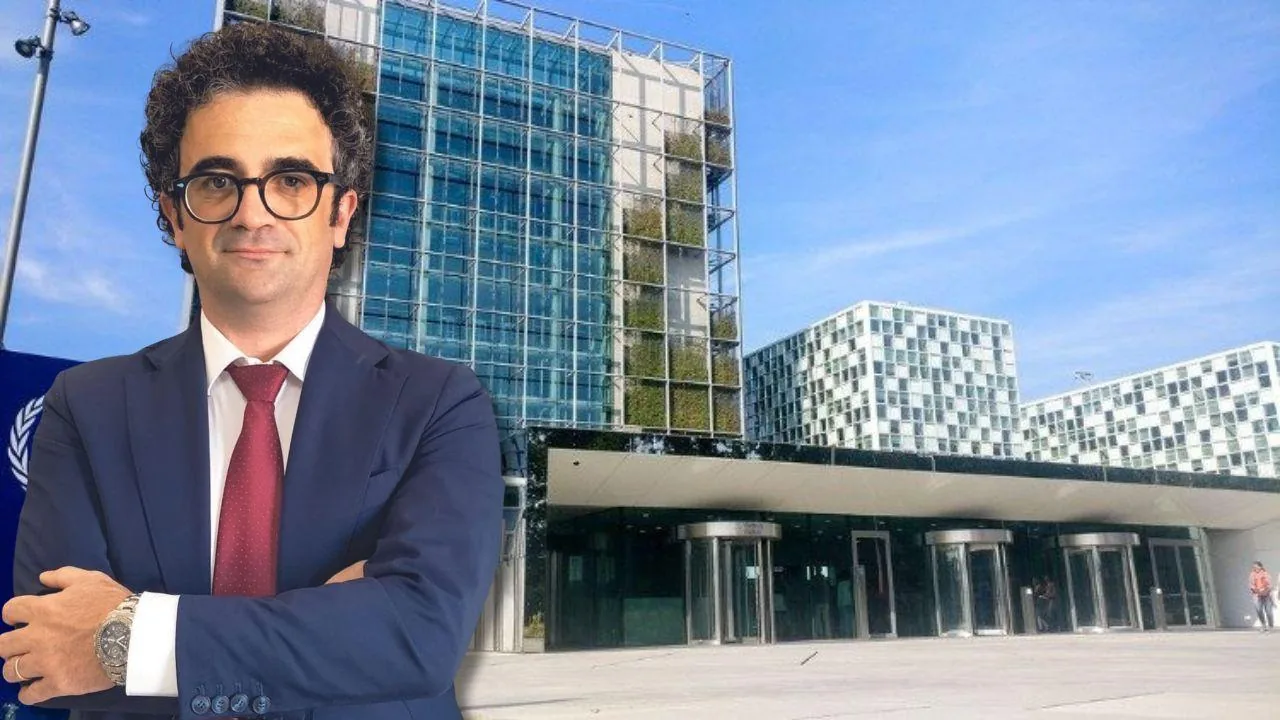
Why are almost no international leaders prosecuted for war crimes? And above all, what is a war crime? And what role does the International Criminal Court play if it often seems unable to judge those responsible?
N.L.
To answer, it is first necessary to clarify that not every violation committed during a conflict automatically constitutes a war crime. This term refers to the most serious violations of international humanitarian law, committed in the context of and in relation to an armed conflict. It is also not necessary for the conduct to be “systematic”: this requirement mainly concerns crimes against humanity. A single particularly serious act can also constitute a war crime.
The fundamental rules are contained in the Hague Conventions, the four 1949 Geneva Conventions, the Additional Protocols, and customary international law. The 1998 Rome Statute, which came into force in 2002, established the International Criminal Court and, in Article 8, lists numerous punishable acts: killing or torturing protected persons, taking hostages, intentional attacks against civilians and civilian objects, pillaging, using starvation against the population, attacks against hospitals and humanitarian workers, and the use of certain prohibited weapons.
The Court does not judge States, but natural persons: soldiers, commanders, ministers, and heads of State. However, it is not a universal tribunal with its own police force. As a rule, it can intervene when the crime was committed on the territory of a State party to the Statute or by a citizen of a State party. It can also exercise its jurisdiction if a non-party State accepts it for a specific situation or when the United Nations Security Council refers the case.
Therefore, the non-membership of the State of the accused does not always exclude the Court’s jurisdiction. If the act is committed on the territory of a State that has accepted its jurisdiction, the Court can proceed even against a citizen of a non-party State. The real limit often emerges later: the Court can issue an arrest warrant but must rely on States to execute it. Without cooperation, the accused can remain free and the trial, normally, cannot start in their absence.
The Court also operates according to the principle of complementarity: it intervenes only when national authorities do not want or are not genuinely able to conduct genuine investigations and trials. It therefore does not automatically replace domestic judges, who remain primarily responsible for prosecuting international crimes.
As for political and military leaders, their responsibility does not always require proof that they ordered every single attack. They can be held accountable for having ordered, facilitated, or contributed to the crime and, in cases provided for by the Statute, also for command responsibility: it must be demonstrated that they knew or should have known about the crimes of subordinates and that they did not take the necessary measures to prevent or punish them.
Official status does not protect before the Court. Article 27 establishes that being head of State or government does not exclude criminal responsibility. The problem, therefore, is not so much the absence of rules, but the difficulty of gathering evidence, overcoming political obstacles, and obtaining arrest. International justice exists, but its effectiveness still largely depends on the cooperation of States.
Legal help desk service: Il Tirreno relies on the competent and qualified collaboration of the law firm Depresbìteris-Scura. The professionals of this firm answer weekly the questions sent to sportellolegale@iltirreno.it.
Read more Weather in Tuscany, strong thunderstorms confirmed: yellow alert. The most at-risk areas